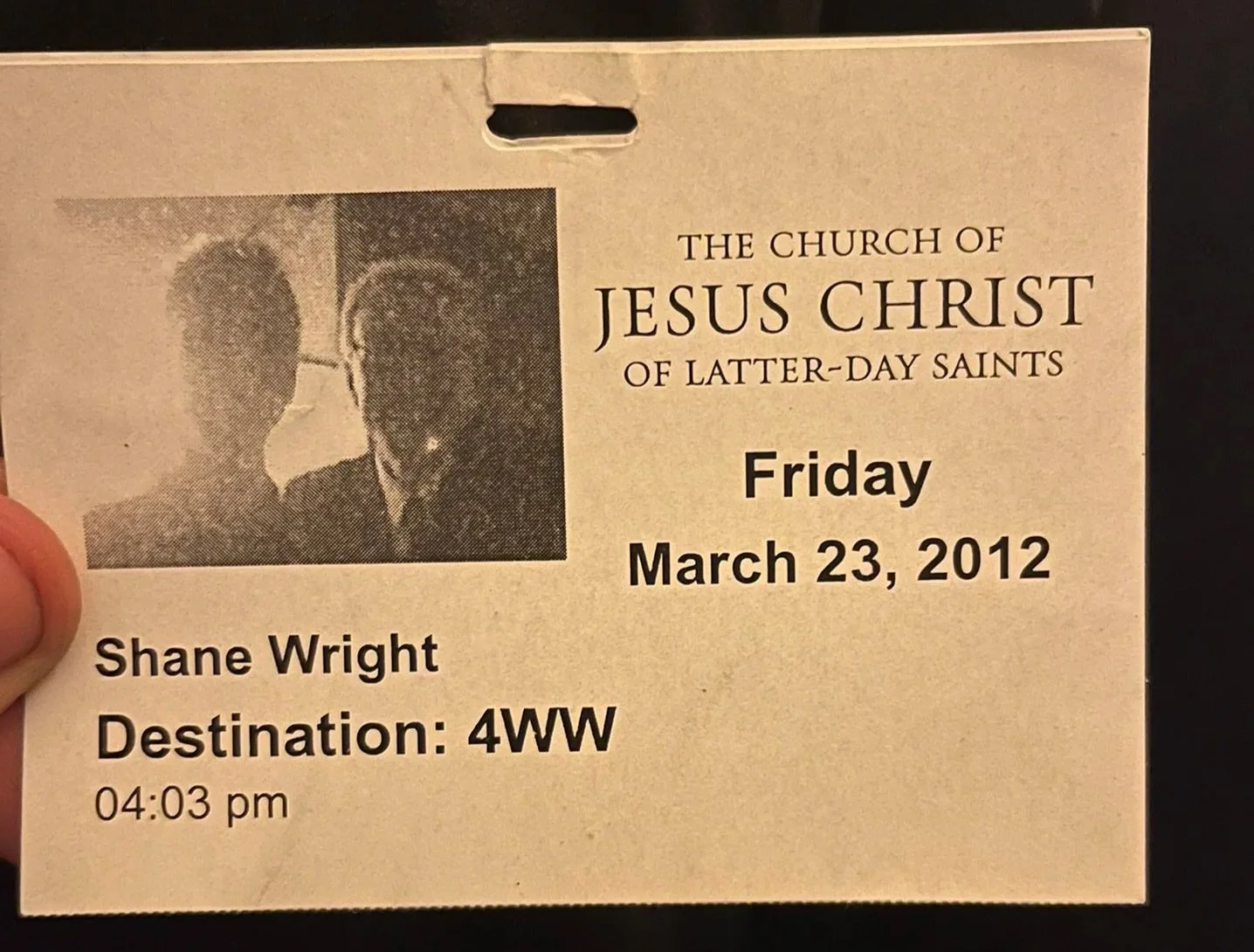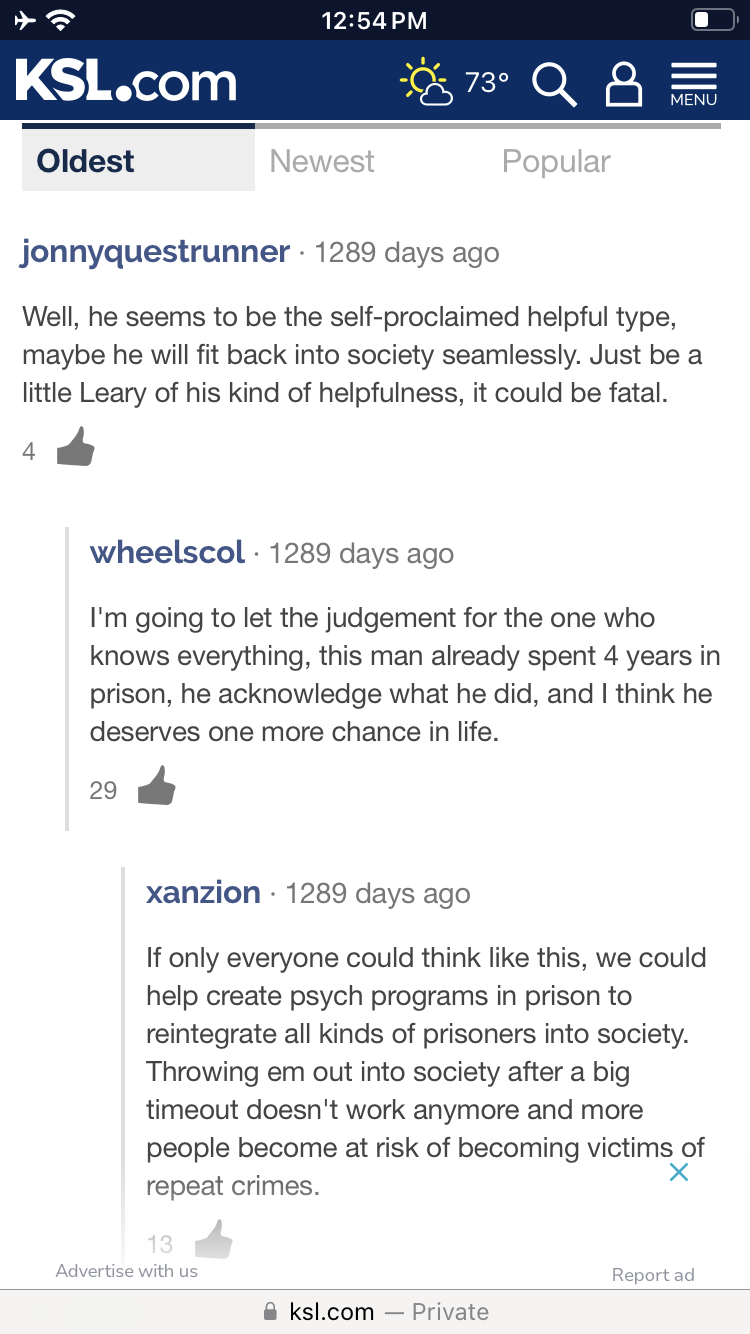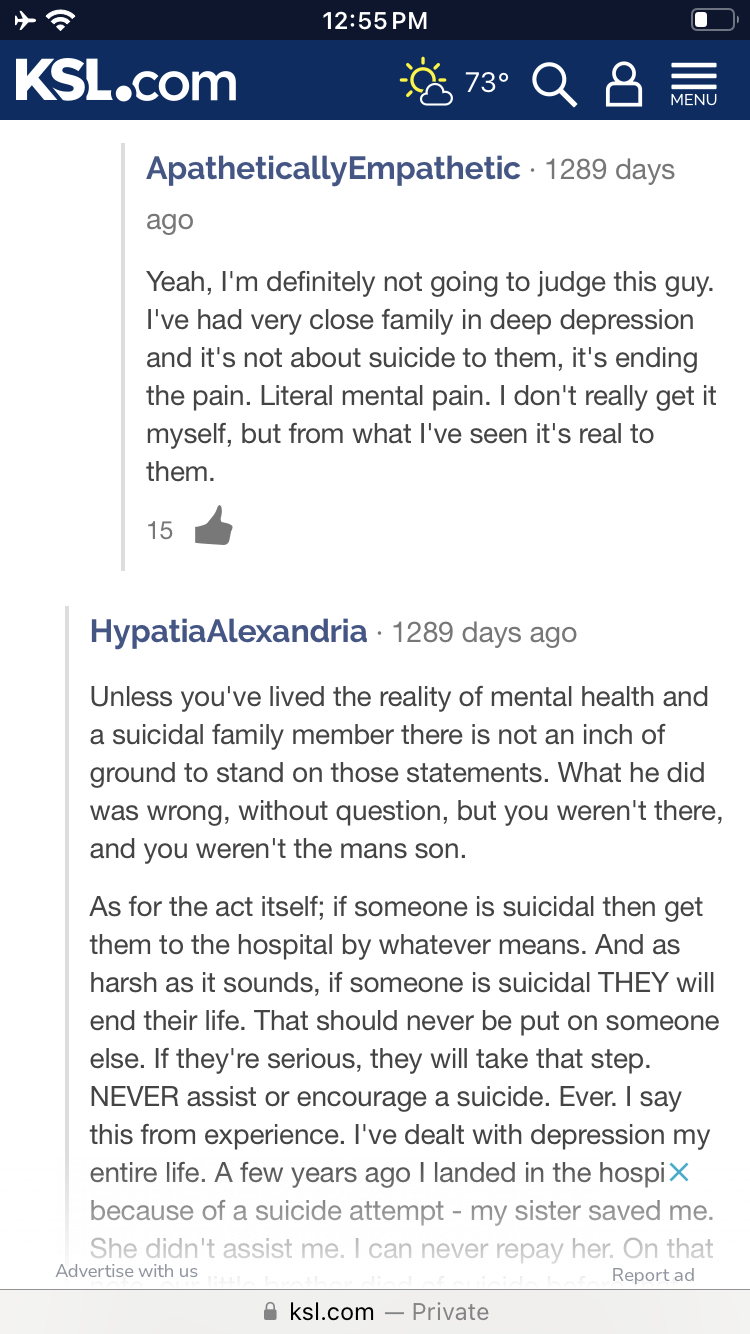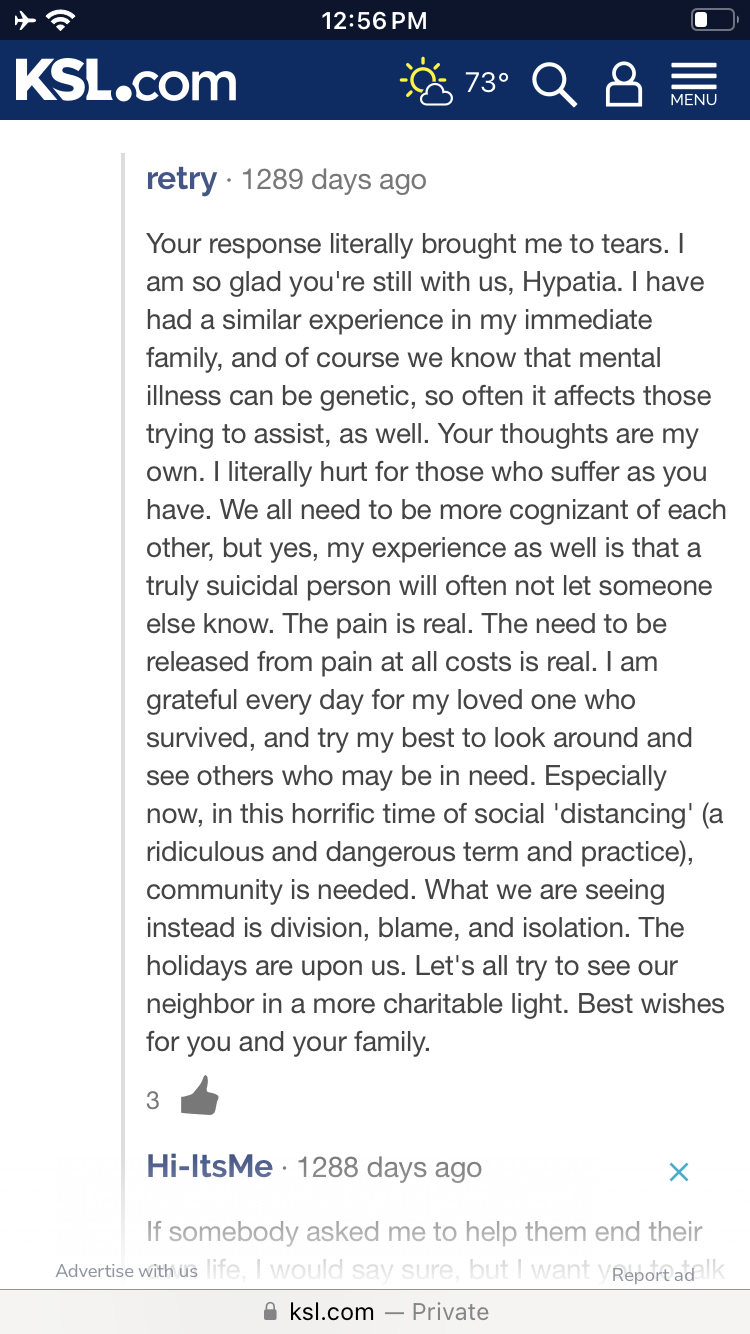
Wright Before Jail has been written for viewers like you.
A Page About Me
Look, I’m not here to tell a sad sob story to garner sympathy for myself. The purpose of this story is to shed light on some of my past. However, I’m using other people’s torches.
Allow me to mansplain.
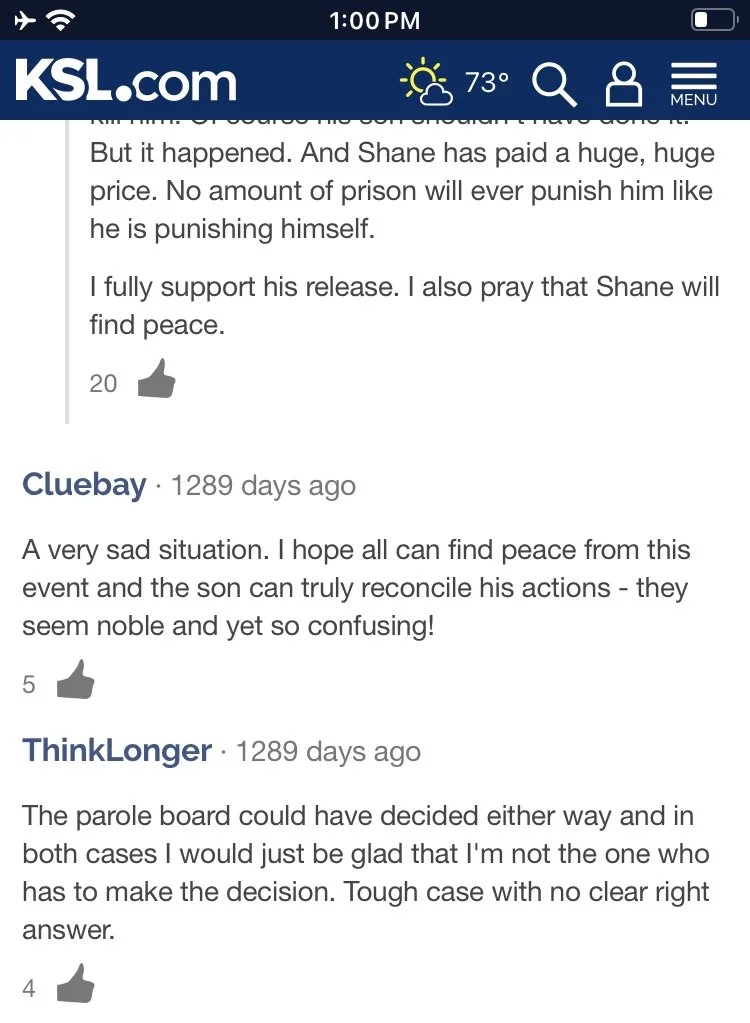
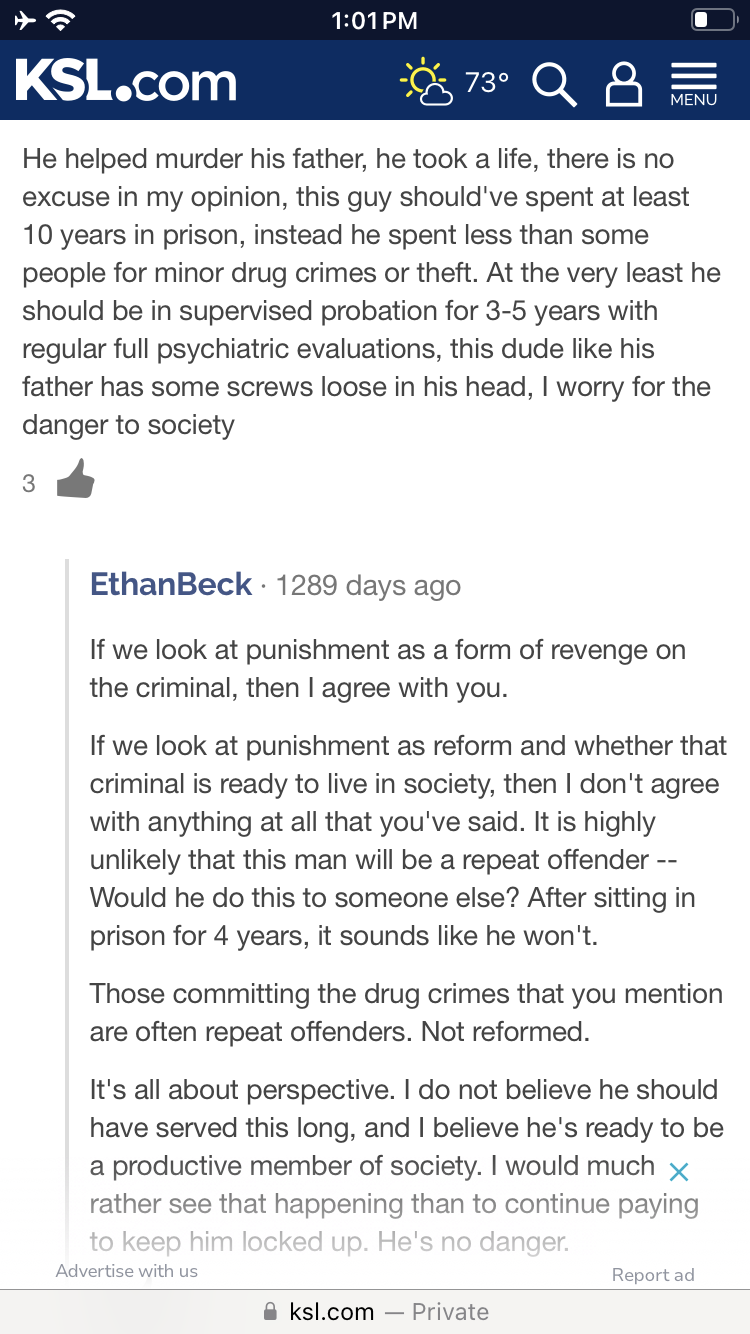
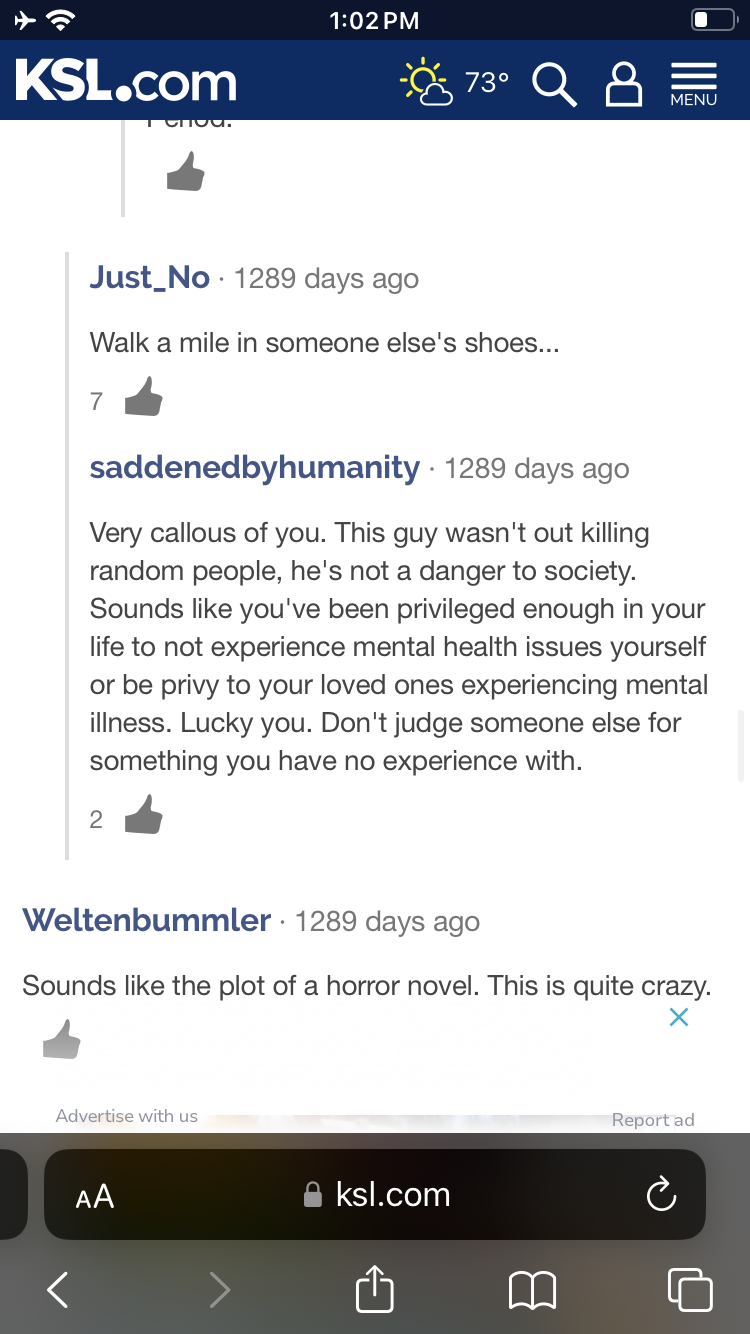
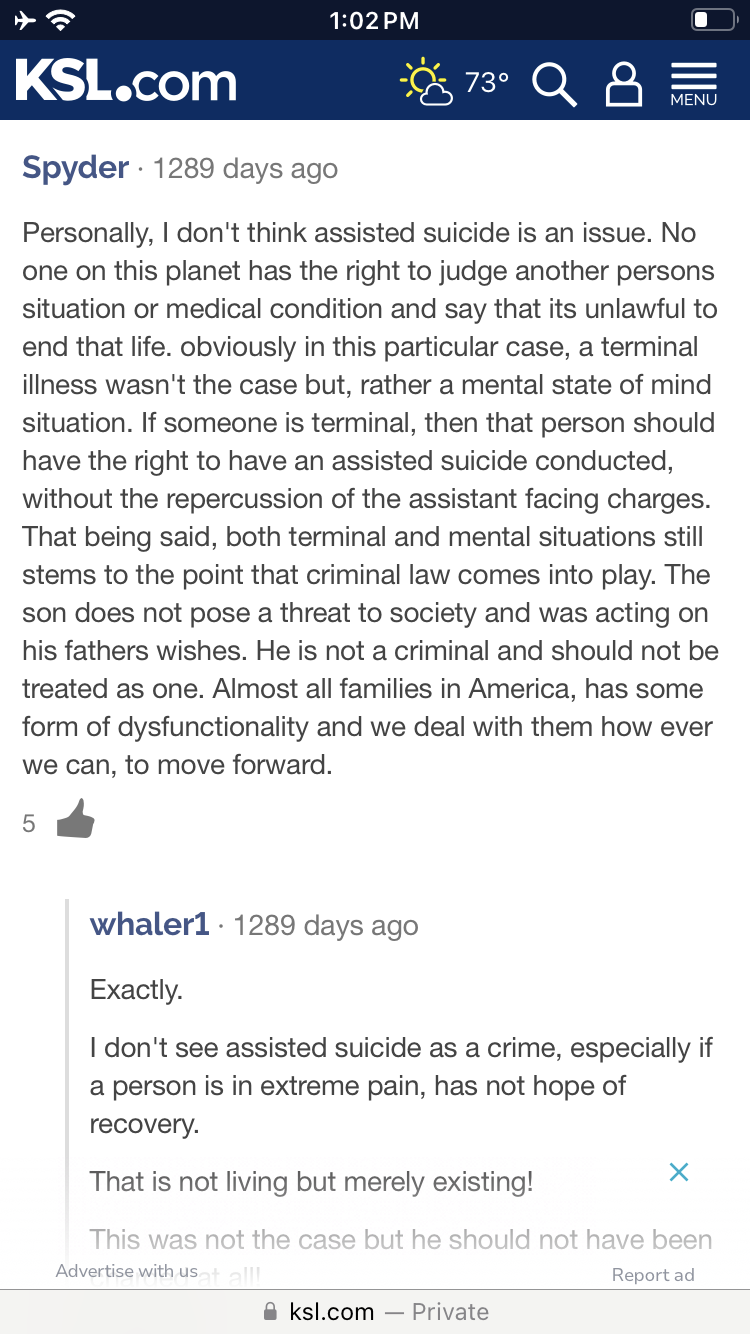
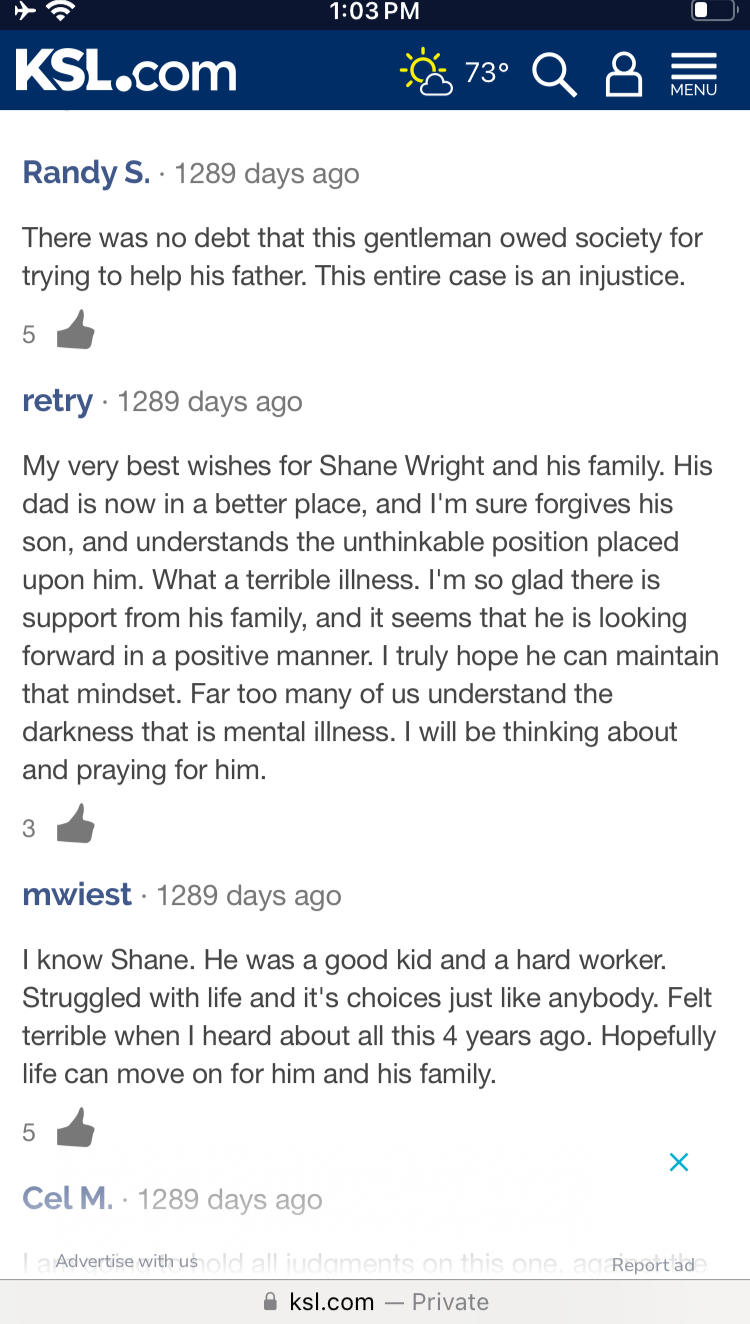
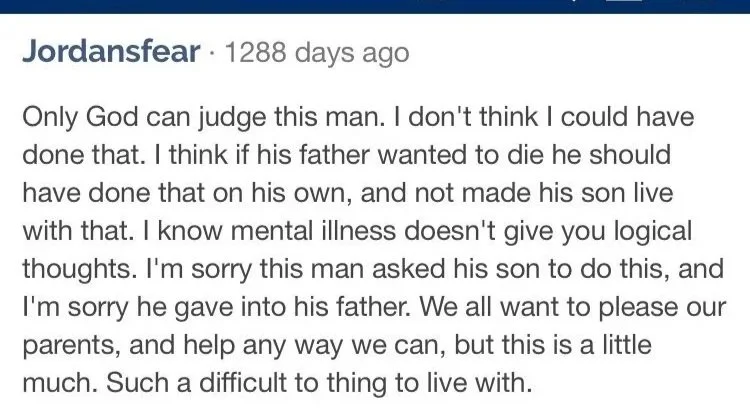
What I’m sharing here, is a collection of what others have said about me. Online discussions and local news articles reporting on every step of the process. My case was public from the moment the crime happened, through all the court dates, to the time the judge had to decide prison time or not, and eventually to my eventual release on parole.
It also includes slices of my attorney’s well-written statement pleading that I not be sent to prison, and why.
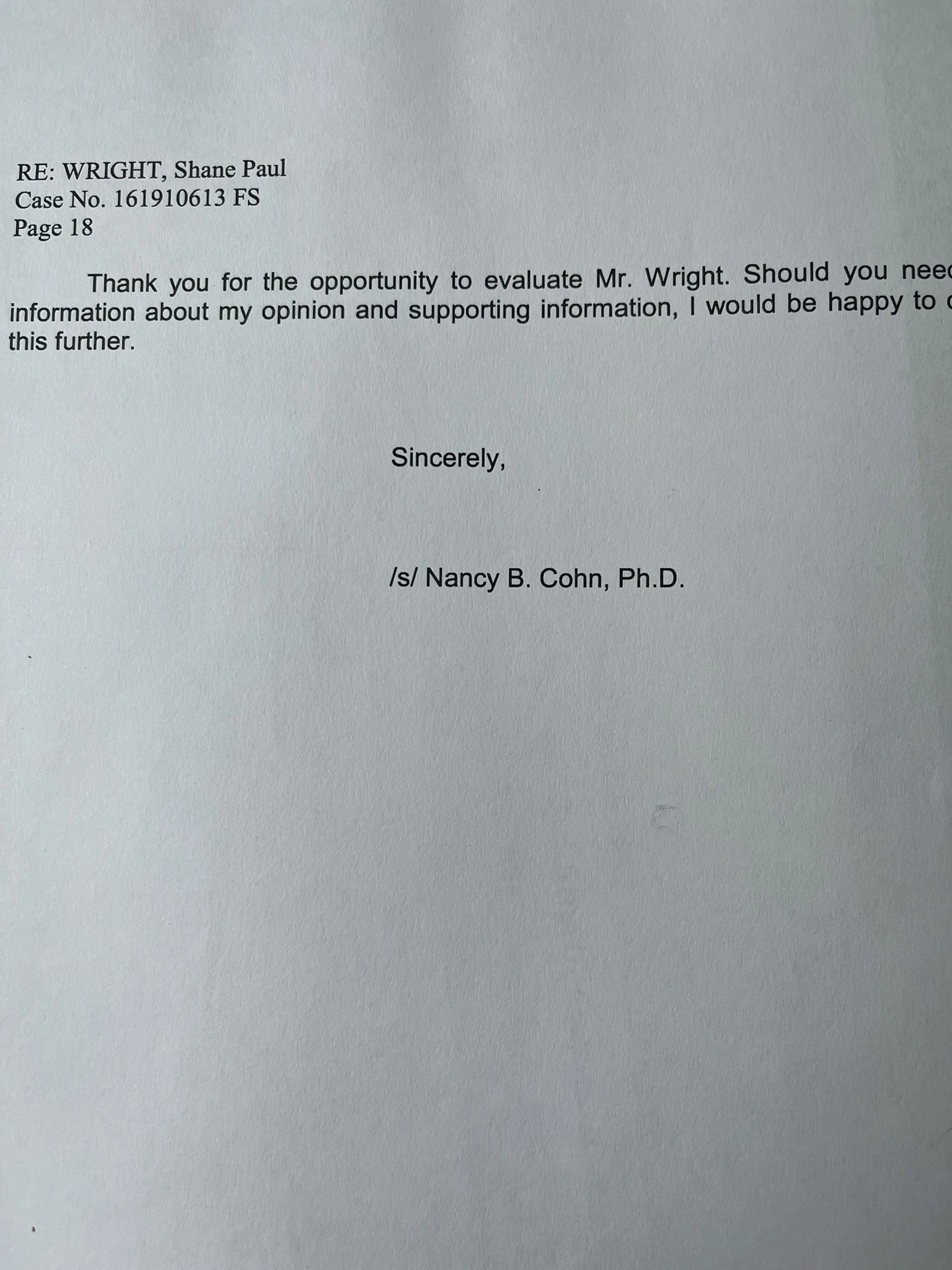
And of course, Dr. Cohn’s (a highly decorated criminal psychologist) 18-page report, which is the result of a nine-month investigation. An investigation that included three multiple-hour interrogations (oops, I mean interviews), a 300-question questionnaire, interviews with family, friends, neighbors, school officials, former coworkers and bosses, as well as access to private journals, text messages, photos, videos, and whatever else she could get her hands on to build a profile of who the hell I was.
I think that when my father’s therapist lawyered up and began providing statements of what he would say, week after week, along with the raw video I recorded of my father in the U of U psych ward after he first asked me to end his life, (included at WrightToJail.com) the picture becomes clearer. I filmed that moment with the intention of showing my family, so they might better understand just how disturbing his mindsets had become. The recording was taken just moments after he had broken down on that same hospital bed and suffered a full-blown panic attack.
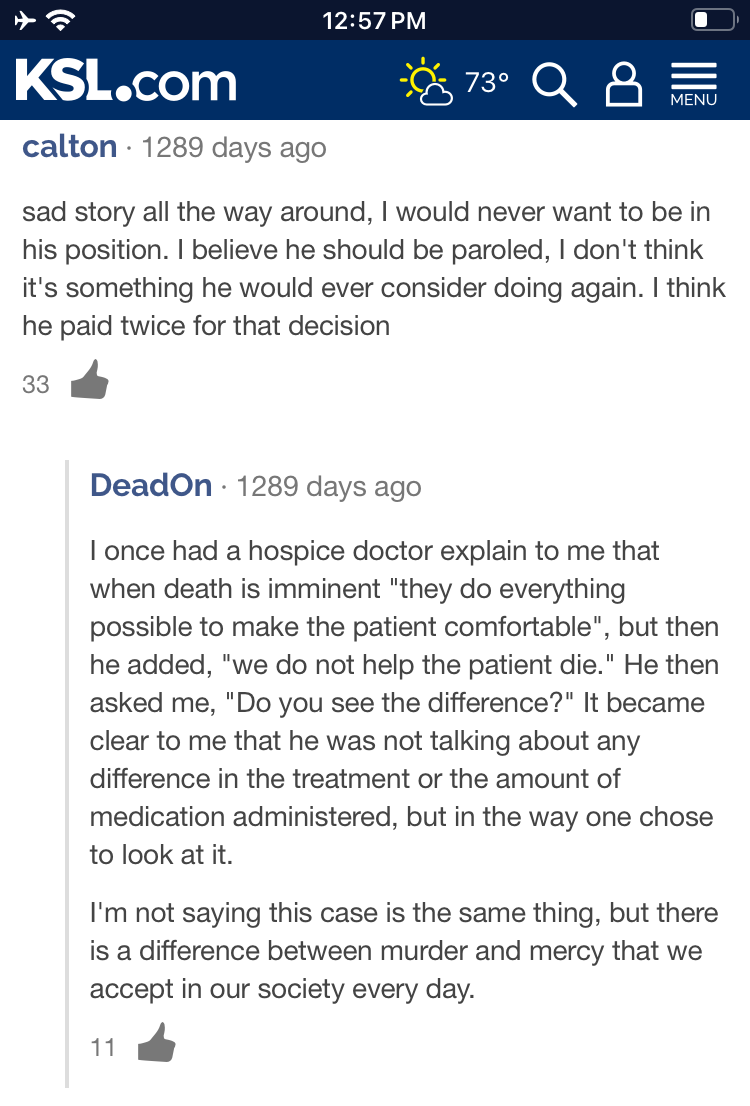
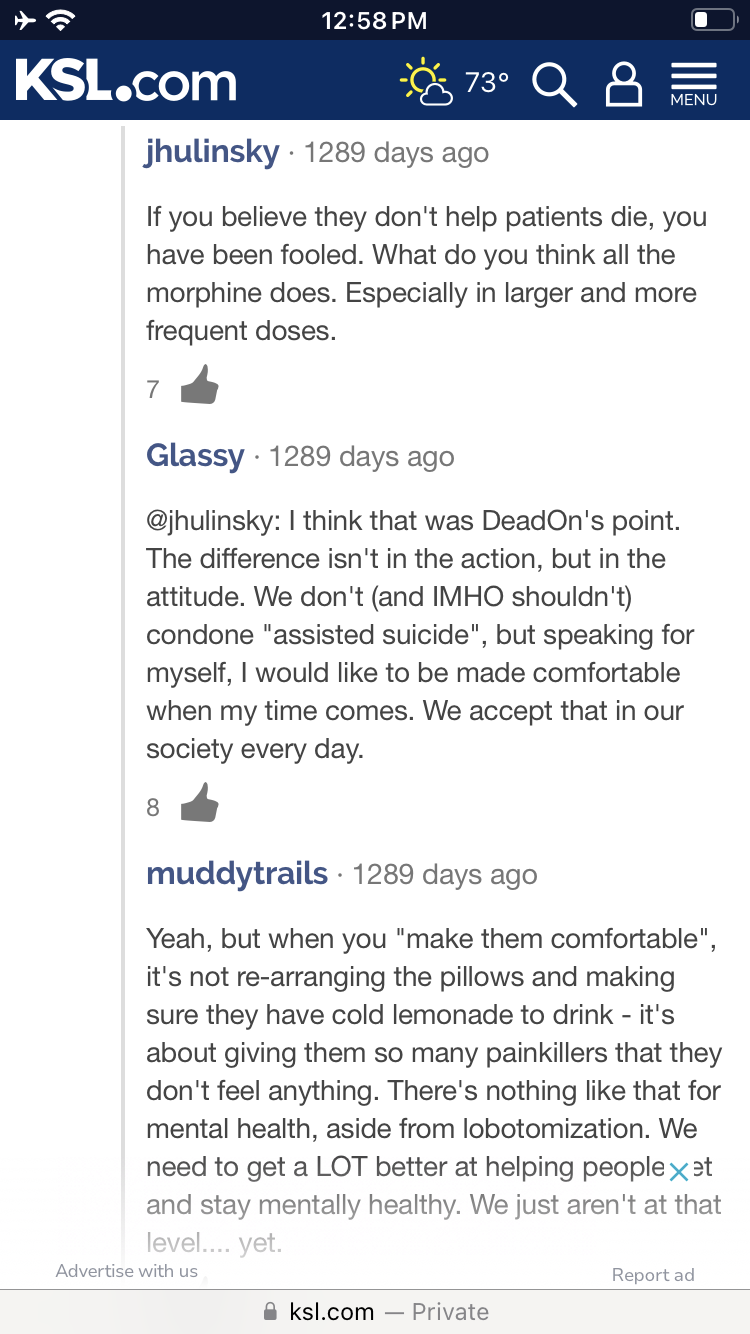
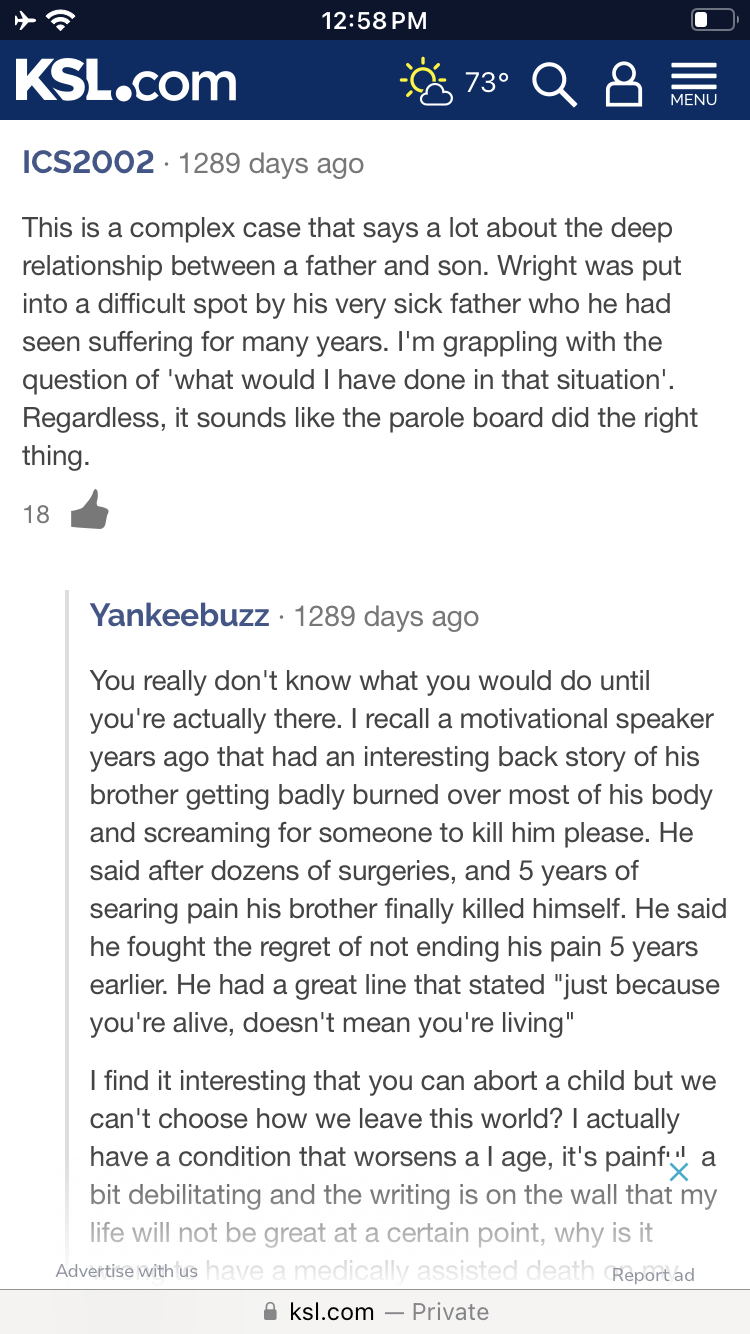
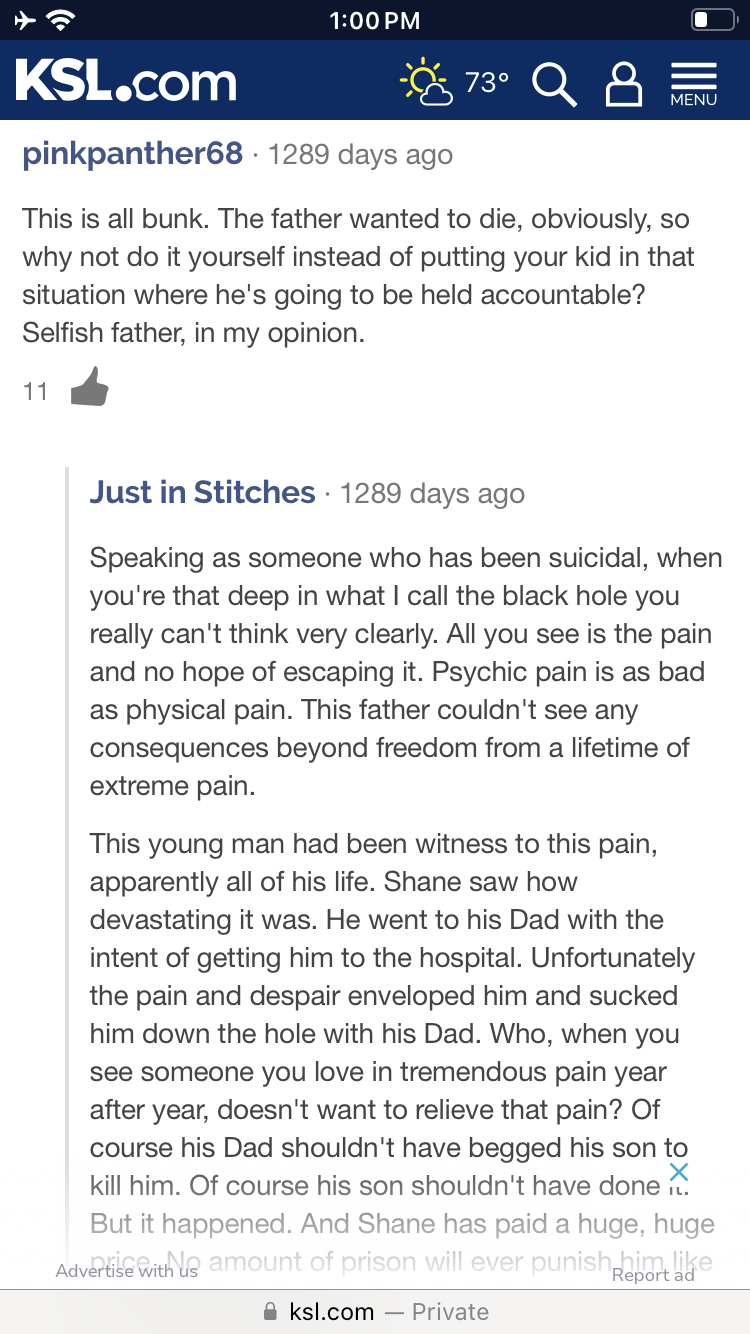
Including these details, I believe, will help the audience better grasp how genuine and raw the blood before me was in his life. And to all the people who’ve heard my story and said, ‘That’s messed up for my Dad to do, blah blah blah’ — maybe reconsider pointing a finger to blame. Maybe change your heart and see that he is not to be labeled a villain. In fact, perhaps there is no villain at all in this case. I have a hard time adopting the mindset that I was treated unfairly, because at the end of the day, I did break the law in an extremely serious way, and therefore it was well within the rights of the courts to handle me the way they did. Not just the courts, but the public too, should have the right to judge my actions. And that’s the whole purpose of this fucking page, because if I have to go through life explaining this every time a background check is required, or I want to get close to someone, then I might as well provide the whole picture.
I’ll never stop running from my past, but I am so done hiding from it.
I will never believe it was okay to do what I did, especially in the way it was asked of me. Because what happened was messy as fuck. I have such a hard time comprehending how brutal it looks, and how impossible it feels that I have to sit with a narrative that I killed a man with my bare hands out of love. Do you know how insanely hard that is to explain or to cope with even after all this time? Drunk people at bars tell me all the time concepts like “Dude, how can you be so stoic and okay after going through that.” People all the time are in awe that I seem to be such a bright and happy person even when I have a hole in my sock and nothing but the $60 bucks in my pocket because three people in the bar picked up my book and I was around to make the sale.
I have an answer in which I can answer here, while I’m alone on the beach, with my ink and dead tree to write on. The answer is a long one though, and it goes like this: I am all of the perceived negative emotions when I am alone. Shame, sadness, regretful, melancholy, fear, anxiety, worry, self-depreciating, bored. For me, these are very common side effects of being alone. However, they allow me to make heartfelt bleeding art that I think comes out “good” simply because it is hard and feels earned.
Nobody who hasn’t been through hell, will fully appreciate heaven.
And that’s what being around people truly is for me. Heaven. I love being around people in the settings I choose to put myself into. It’s a vacation away from being alone and all the negative emotions are replaced by smiles, jokes, good vibes, and plenty of dopamine listening to others.
I can’t help it, I’m a completely different person when I’m around other people than when I am alone. And I think a lot of people can relate to that, it’s just that I take everything to the extreme end of the spectrum. And I’m aware of it.
Mansplaining over. Now you kind of get the gist of why it feels like I have a duo personality sometimes.
I will always be haunted by that night. But the ghost of my father is not a shadowy figure… he is a bright, beautiful, and beaming light!!!
He does not whisper like the Holy Ghost, he and his fellow Mormons believe in, but blazes with memories of tenderness and love. Especially in moments when hardship strikes, or sleep is missing.
I must pause here to offer an apology. To all who have carried hurt or grief because of my actions, I am sorry. I know he was a man deeply loved, and I do not expect forgiveness… not from some, not from all. Still, I give you this sincere apology.
A second apology: I am sorry to those I abandoned, left behind, or was too selfish to continue cultivating a relationship with. I am sorry for the promises I broke and the trust I betrayed. I am sorry to the people I still owe a couple bucks to while living on the bum. I am sorry for putting myself first so many times under the guise of ‘putting the oxygen mask on first.’ I am sorry to those who’s feelings have been hurt because I used the word NO (that one’s a little passive aggressive) I am sorry for the excuses I made to avoid doing the hard thing (and sometimes the right thing). I am sorry for my pretentious attitude, and for acting as though I always knew best.
And lastly, I am sorry to myself. For being so cruel, for being so harsh. For knowingly placing myself in risky situations these last few years, driven by a suicidal mindset and a belief that I was nothing more than a dead man walking.
I know that the path of discipline, and of facing hard truths rather than avoiding them, is ultimately the path that allows me to feel like a man of repute. And it is the path I am dedicated to now.
Nature does not care about your feelings, or mine.
Fulfillment is not based on being happy or sad.
Fortune favors the adaptable, the accountable, and the ones who exercise empathy.
So, the real question I have is this:
Will fortune favor you moving forward?
Hello, inquisitive guest, and welcome to a slice of one of my past lifetimes.
If you're reading this, it means that after thousands of hours, I have finally finished the last leg of this story. I call it a story because if I simply called it my life, it would be judged as one, and critics would twist my character like a lawyer who got OJ off.
And in Wright Before Jail, no one gets off.
This journey you're about to finish, starts in a time before finding myself in a jail cell with no hopes.
I did not apply myself in school when I was younger. Instead, I skipped class and read lots of books. While locked up in Salt Lake County Jail, I spent about eight hours a day/night reading books that came from their massive library collection. Reading so many imagination invoking stories was the sole reason I felt jusssssst confident enough to write one myself. I also struggle with my slight dyslexia, especially in spelling and sentence structure. However, with time and effort, I've been able to transform my errors into double meanings and clever wordplay.
So, the story starts with The Book of Knight, which is basically a mirror of the prologue, but written in the style of the Book of Mormon. It’s meant to be a dedication to my late father and his deeply held LDS religious beliefs.
{“Religious beliefs that shaped both of their entire lives.”}
Cillian, this isn't the place for me to explain my crime or my father's intentions.
{“No. This is absolutely the time. Just tell them the truth and be quick about it.”}
Gah! Cillian, I disagree, it’s-
{“Shhhhh, hush Shane. Quiet yourself. I’ll handle this for you.”}
{“The rapid-fire facts of the matter: In 2002 Shane’s parents divorced due to his mother being brave and standing up for her beliefs, and ultimately leaving the Mormon church.
{“In 2004 Shane’s own religious questions could not be satiated by church doctrine, leading to multiple discussions with church leaders about leaving the church himself at the age of fourteen. Thus started countless hours of debate about spiritual matters with his father.”}
{“Throughout the years of adulthood, Shane had a very close relationship with Bryan and visited him at work frequently. Bryan worked in an executive position within the business side of the LDS church. Work was his passion in life above all else, and it was not uncommon for Bryan to go to work before 5 AM and not get home until 7 or 8 PM, usually running on about 3 or 4 hours of sleep each night.”}
{“Fast forward to 2015. Shane had spent the entire day talking with his father about spirituality and listened to his him describe his many symptoms of depression and suicidal ideologies. In the morning time, Bryan Wright came to Shane with a request that he help him on a mission to return to his heavenly father. To die. He wanted assistance with ending his life.”}
{“After hearing such things, Shane put Bryan Wright into his care and after Bryan was finished writing letters to his closest friends and church leaders, Shane drove him to the University of Utah mental health psych ward. On the freeway, Bryan opened the car door multiple times and joked about jumping out.”}
{“Once Bryan had his vitals checked and was processed in, Shane was allowed in a hospital room where Bryan waited on a hospital bed for the nurse. Before anyone was able to even go over basic information, Bryan went through a strong panic attack.”}
{“After he calmed down, his personality switched, and he became reflective, talking very peacefully. Shane, wanting to show his family and others the severity of Bryans condition, recorded a video and took pictures of his father without his permission or knowledge.”}
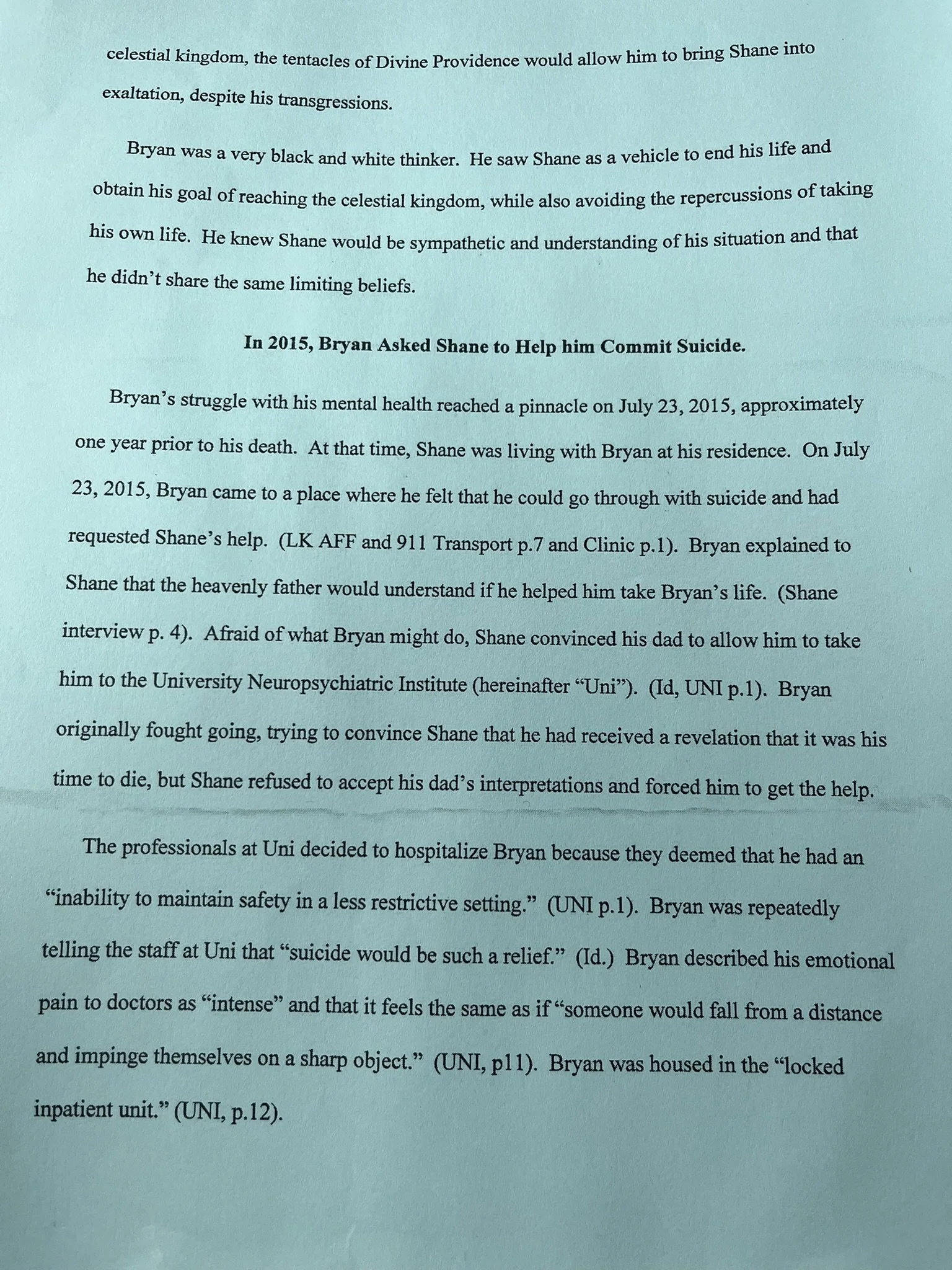
{“Bryan Wright was indeed deemed a threat to himself, so he endured the maximum holding time by UNI at three weeks. (Court documents state the following: The professionals at UNI decided to hospitalize Bryan because they deemed that he had an “inability to maintain safety in a less restrictive setting.” Bryan was repeatedly telling the staff at UNI that “suicide would be such a relief.” Bryan described his emotional pain to doctors as “intense” and that it feels the same as if “someone would fall from a distance and impinge themselves on a sharp object.” Bryan was housed in the “locked impatient unit.” Three days into Bryan’s three week stay, Shane left Utah and moved to Oregon with immense guilt and sorrow.”}
{“For a little while Bryan took his meds, followed the directions of people who cared about him, and seemed to be making a strong recovery. However, after a bit more time, he started to show the cracks that came from him acting and pretending things were okay, when in all reality, he was still falling apart at the seams. “}
{“Provided next are some court documented statements from his therapist from that year. (she lawyered up and released such statements after feeling compelled to share details that may shed light on Shane’s crime while an investigation was going on.
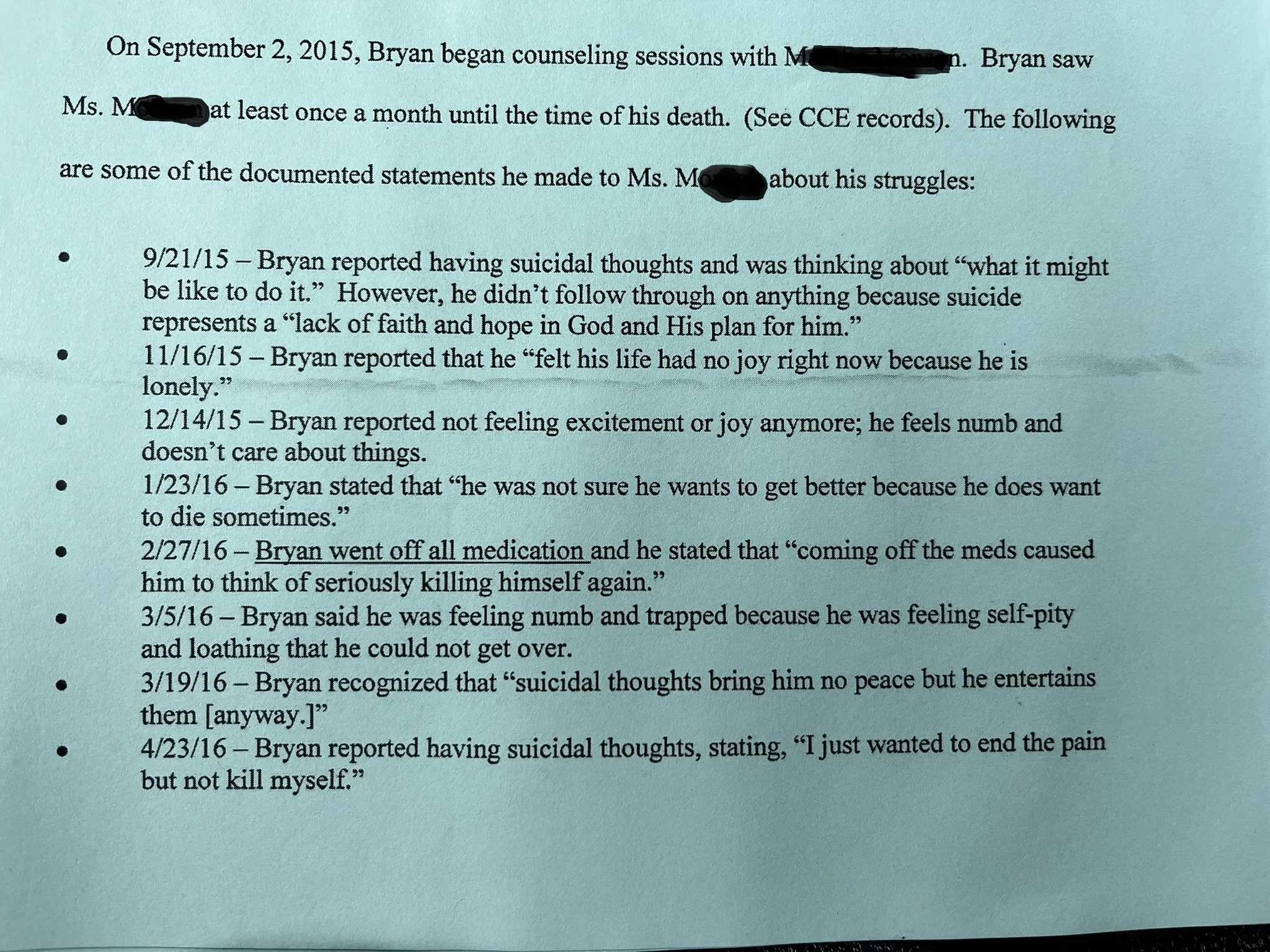
{“Below is a slice of legal documentation provided to the judge before declaring sentencing to Shane Wright.”}
On September 2, 2015, Bryan began counseling sessions with Ms. ____. Bryan saw Ms. ___ at least once a month until the time of his death. (See CCE records). The following are some of the documented statements he made to Ms. ___ about his struggles:
· 9/21/15 – Bryan reported having suicidal thoughts and was thinking about “what it might be like to do it.” However, he didn’t follow through on anything because suicide represents a “lack of faith and hope in God and His plan for him.”
· 11/16/15 – Bryan reported that he “felt his life had no joy right now because he is lonely.”
· 12/14/15 – Bryan reported not feeling excitement or joy anymore; he feels numb and doesn’t care about things.
· 1/23/16 Bryan stated that “he was not sure he wants to get better because he does want to die sometimes.”
· 2/27/16 – Bryan went off all medication and he stated that “coming off the meds caused him to think of seriously killing himself again.”
· 3/5/16 – Bryan said he was feeling numb and trapped because he was feeling self-pity and loathing that he could not get over.
· 3/19/16 – Bryan recognized that “suicidal thoughts bring him no peace but he entertains them [anyway.]”
· 4/23/16 – Bryan reported having suicidal thoughts, stating, “I just wanted to end the pain but not kill myself.”
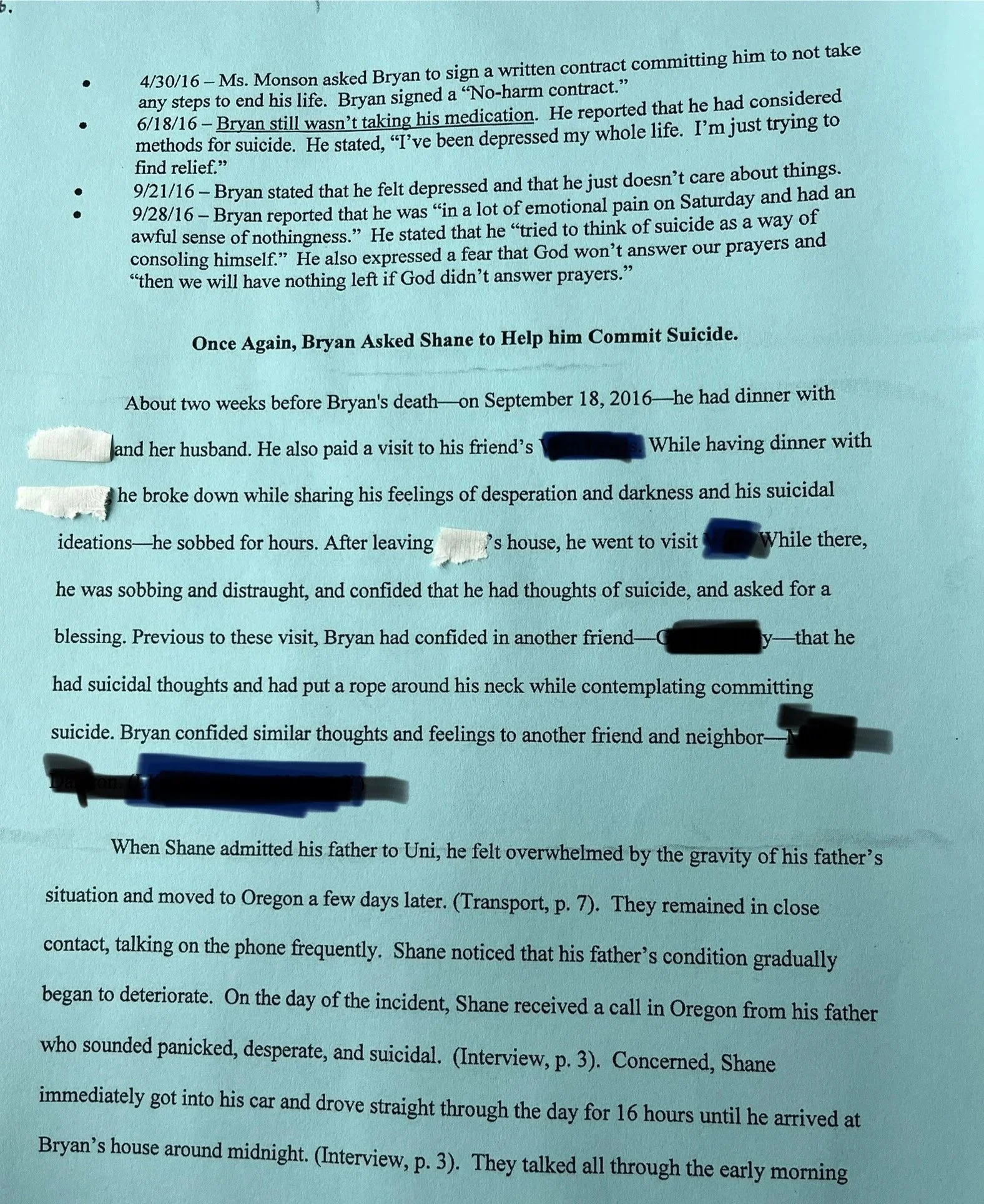
· 4/30/16 – Ms. ___ asked Bryan to sign a written contract committing him to not take any steps to end his life. Bryan signed a “No-harm contract.”
· 6/18/16 – Bryan still wasn’t taking his medication. He stated, “I’ve been depressed my whole life. “I’m just trying to find relief.”
· 9/21/16 – Bryan stated that he felt depressed and that he just doesn’t care about things.
· 9/28/16 – Bryan reported that he was “in a lot of emotional pain on Saturday and had an awful sense of nothingness.” He stated that he “tried to think of suicide as a way of consoling himself.” He also expressed a fear that God won’t answer our prayers and “then we will have nothing left if God didn’t answer prayers.”
Once again, Bryan asked Shane to help him commit suicide.
About two weeks before Bryans death—on September 18, 2016 he had dinner with ___ and her husband. He also paid a visit to his friend’s ______. While having dinner with ____ he broke down while sharing his feelings of desperation and darkness and his suicidal ideations—he sobbed for hours. After leaving ___ house, he went to visit ___. While there, he was sobbing and distraught, and confided that he had thoughts of suicide, and asked for a blessing. Previous to these visits, Bryan had confided in another friend ____ that he had suicidal thoughts and had put a rope around his neck while contemplating committing suicide. Bryan confided similar thoughts and feelings to another friend and neighbor _____.
When Shane admitted his father to Uni, he felt overwhelmed by the gravity of his fathers situation and moved to Oregon a few days later. (Transport p. 7). They remained in close contact, talking on the phone frequently. Shane noticed that his father’s condition gradually began to deteriorate. On the day of the incident, Shane received a call in Oregon from his father who sounded panicked, desperate, and suicidal. (Interview, p. 3)
Concerned, Shane immediately got into his car and drove straight through the day for 16 hours until he arrived at Bryan’s house around midnight. They talked all through the early morning…. End of page.
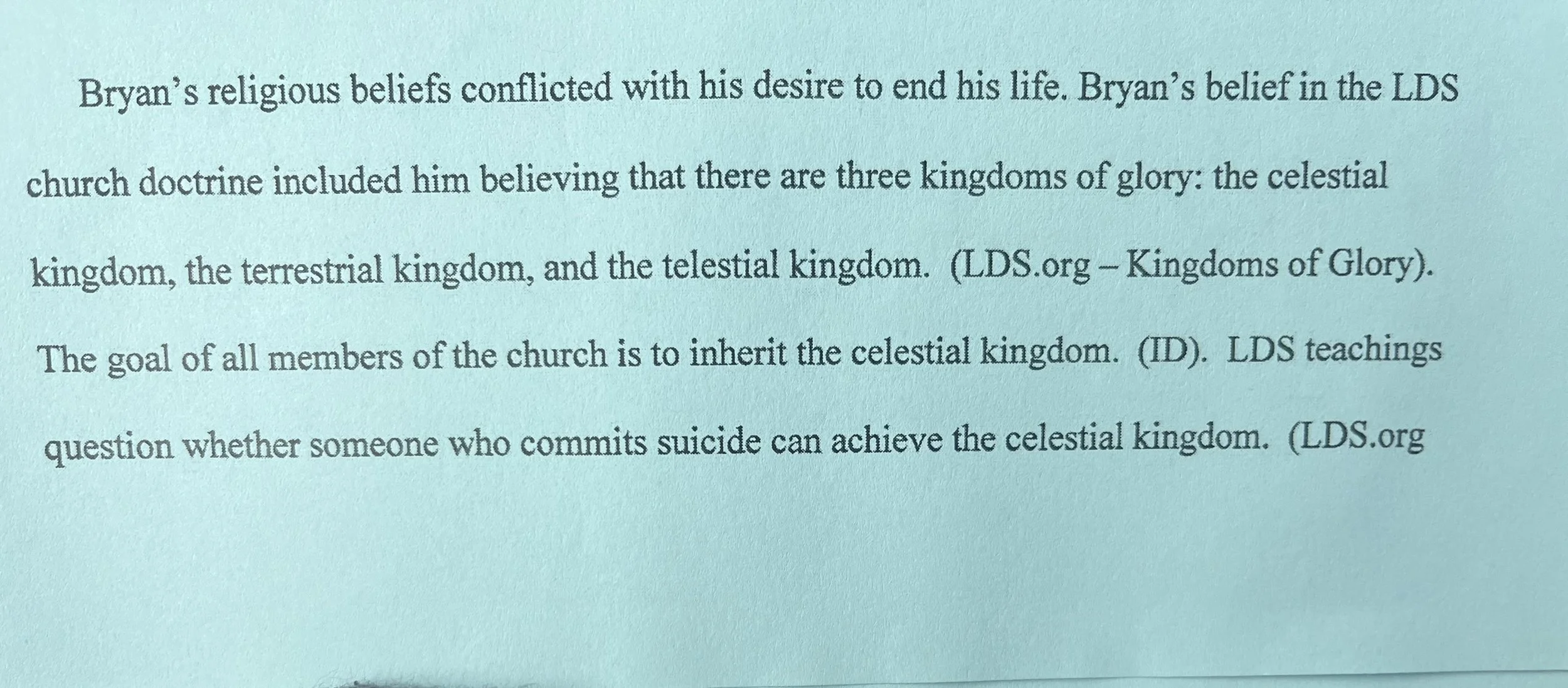
Bryan’s religious beliefs conflicted with his desire to end his life. Bryan’s belief in the LDS church doctrine included him believing there are the three kingdoms of glory: the celestial kingdom, the terrestrial kingdom, and the telestial kingdom. ( LDS.org – Kingdoms of Glory_. The goal of all members of the church is to inherit the celestial kingdom.
{“The last part about questioning whether someone who commits suicide can achieve the highest level of heaven, was the hardest part for Bryan Wright to cope with. He felt it was his purpose to die to be able to “save” the people he loved. People who had fallen from the path of the church, like his son Shane. Here’s a deeper look at that, because it’s super important to understand where Bryan drew his inspiration from.”}
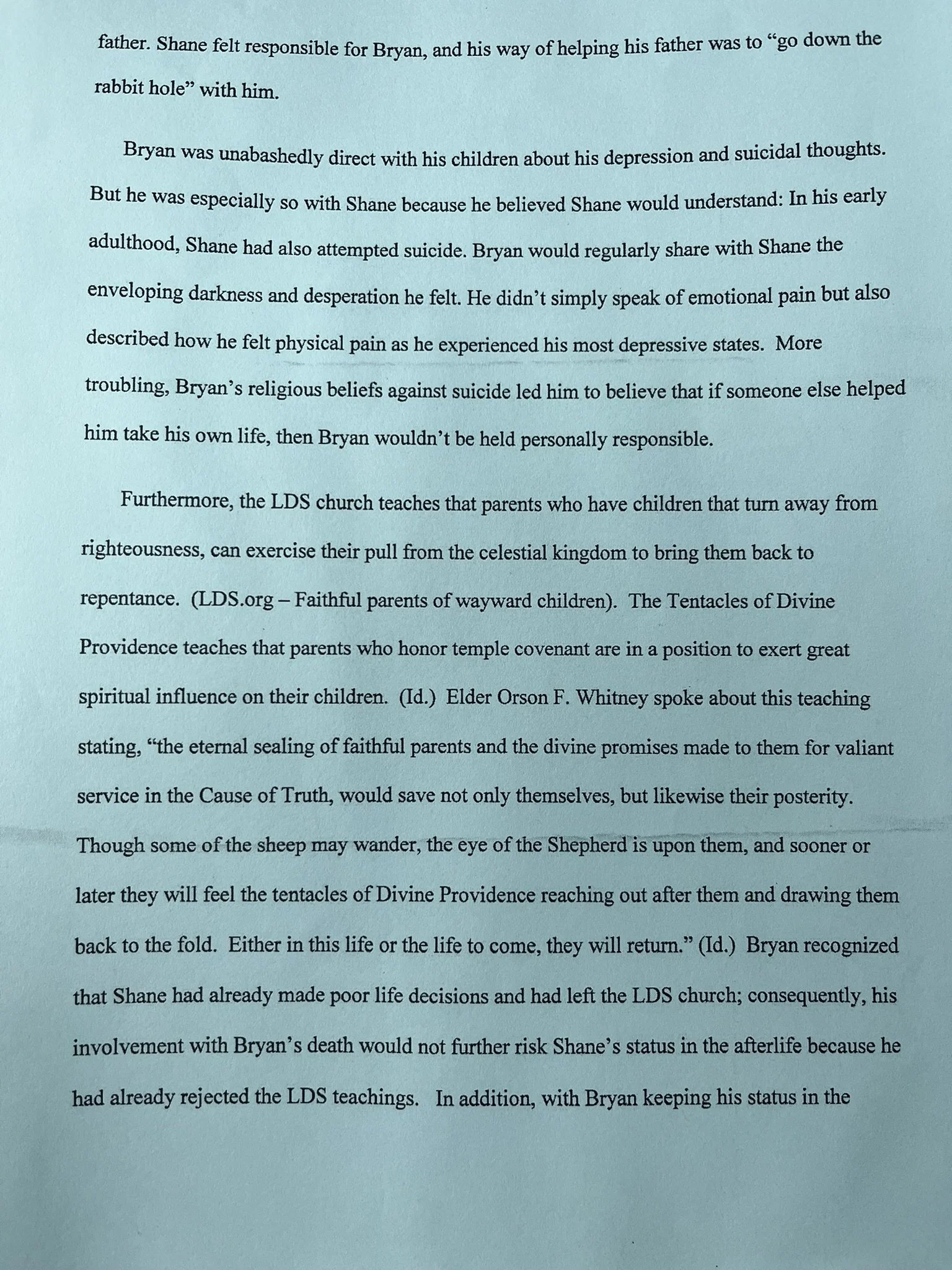
Bryan was unabashedly direct with his children about his depression and suicidal thoughts. But he was especially so with Shane because he believed Shane would understand: In his early adulthood, Shane had also attempted suicide. Bryan would regularly share with Shane the enveloping darkness and desperation he felt. He didn’t simply speak of emotional pain but also described how he felt physical pain as he experienced his most depressive states. More troubling, Bryan’s religious beliefs against suicide led him to believe that if someone else helped him take his own life, then Bryan wouldn’t be held personally responsible.
Furthermore, the LDS church teaches that parents who have children that turn away from righteousness, can exercise their pull from the celestial kingdom to bring them back to repentance. (LDS.org – Faithful parents of wayward children). The Tentacles of Divine Providence teaches that parents who honor temple covenant are in a position to exert great spiritual influence on their children.
Bryan recognized that Shane had already made poor life decisions and had left the LDS church; consequently, his involvement with Bryan’s death would not further risk Shane’s status in the afterlife because he had already rejected the LDS teachings. In addition, with Bryan keeping his status in the celestial kingdom, the tentacles of Divine Providence would allow him to bring Shane into exaltation, despite his transgressions.
{“So, like I said before, about a year after taking his father to the hospital, Shane got a very concerning call from Bryan about God not answering prayers. Shane packed up what he could in his car, woke up the next morning after next to no sleep, and drove sixteen hours from the Oregon Coast, to Salt Lake City, Utah.”}
{“When Shane arrived, it was 11:00 PM. He and his father embraced warmly and the air was light with catching up on life. However, as the night went on, Bryan started to break down and share all that was troubling him still in life. Bryan eventually tried to convince Shane to help him end his life again, stating it’s his time to go.”}
{“Shane told his father that he was going to have to take him back to the hospital. Bryan did not like the sound of that and went into the other room to retrieve the journals he wrote in during the weeks of his hospital stay the previous year. After showing Shane a picture, he drew of a doorway leading to heaven, he looked off into the distance at, what he called angels, and asked “is this okay”. “}
{“Shane ended up attempting to follow through with his fathers wish after that, and in a way that is excruciating for Shane to comprehend, even to this day. Almost immediately after, Shane, who was beyond distraught from what had transpired, struggled with a decision of ending his own life or calling the police.”}
{“The cops showed up, and he was still bawling. They put him in a cop car and he answered any question they asked him. After a couple hours, the sun had risen, and he was passed off to a detective who drove him to an interrogation room. The detective and her partner questioned Shane for over three hours, in which Shane declined the need for an attorney present and answered any and all questions through snot and tears that did not dry the whole time.”}
{“After satisfied with their work, the detectives took his clothes for evidence, put him in a gown, and booked him into Salt Lake County jail on an attempted murder charge.”}
{“Five days later, when the plug was pulled due to low brain activity, Bryan Wright died of the injuries sustained from Shane. Shane’s charges were upgraded to murder, and bail was set to $1,000,007.00-”}
Okay shut the **** up Cillian, that’s enough out of you.
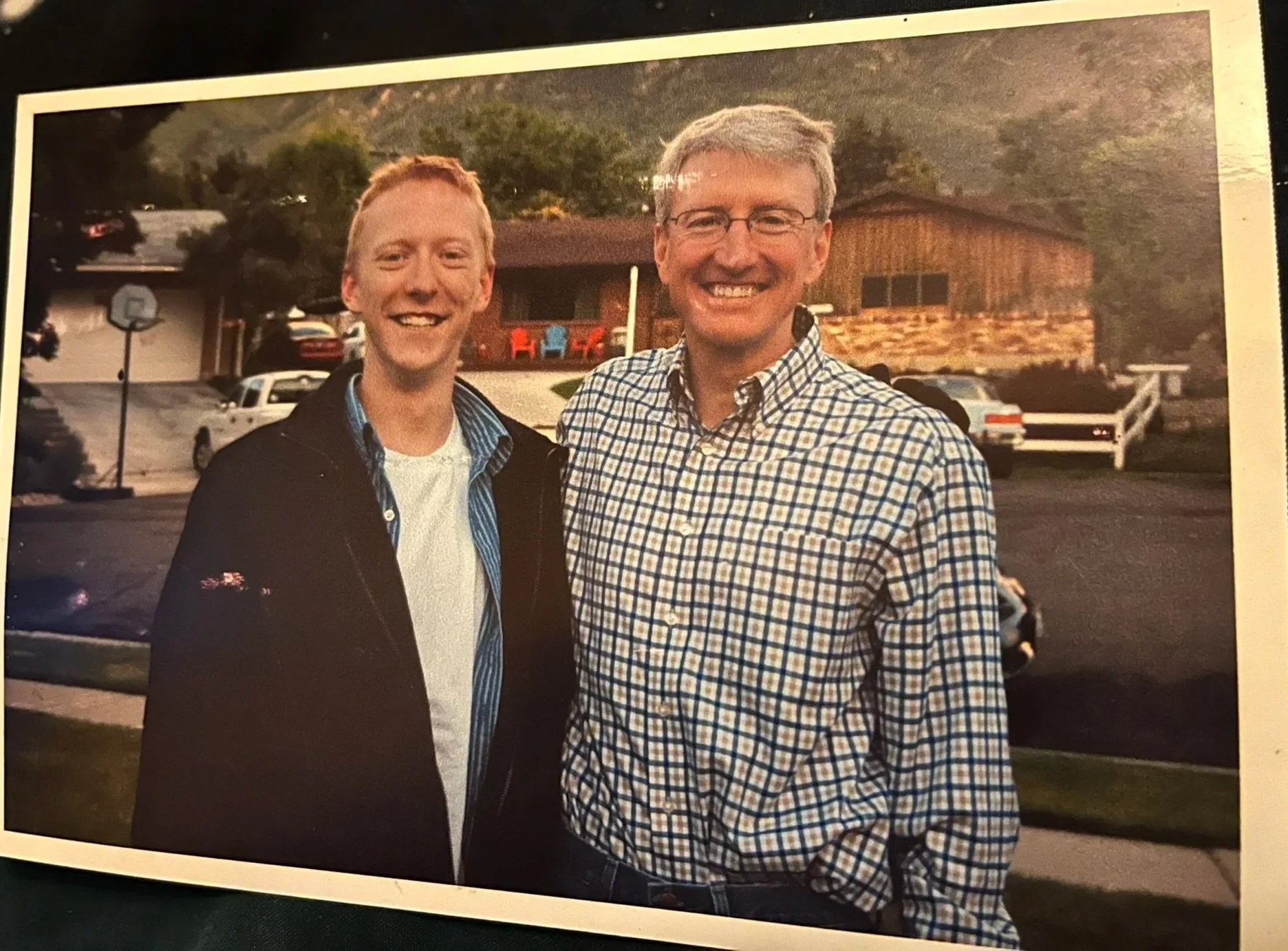
My Dad was literally one of the kindest, most giving, and deepest men to have ever walked this Earth. He was always providing service to those in need, was literal friends with all the senior citizens in the neighborhood, and was the epitome of a modern-day monk. He never had a sip of alcohol, was a faithful husband, gentle in his manner, never cussed or yelled or blamed others for anything. He also did not just follow the teachings of the LDS church blindly. He went over every line of scripture and doctrine and choose for himself to believe it to be true. By the time he went to his heaven, he had no faith left, because he KNEW the teachings of the church were true. It was ultimately his own ego that he wrestled with the most in his struggles pertaining to death and God not answering prayers.
No matter what anyone thinks or says about my pops, the truth is that he was a great man, complex father, and my best friend. The pain in which he endured inside his head is something very few people will ever comprehend or understand.
I have shared my story very openly with all varieties of people: Inmates in jail and prison, friends (new and old), people interviewing me for a job after asking about the 4-year gap on my resume, landlords before a background check, women I’m interested in dating, random people who come into the bar I frequent, and everyone in-between. I like to get deep; I like to get to know people’s true core and soul as best I can.
There is a consistency with just about everyone I’ve shared my story with, and that is, they can relate to my story in some way or another. Some will feel we share a safe space and share deep secrets they harbor. Some will relate by telling me they have had a parent tell them “If I’m ever a vegetable or I can’t wipe my own ass, pull the plug.” Some will relate by telling me a story of taking care of their chronically ill parents, or sometimes their own parents struggle with taking care of their grandparents in old age and/or sickness.
Trauma bonding with so many beautiful and wonderful people has helped me process and heal my wounds during these years of freedom I’ve been gifted, and has ultimately been the driving force for me to share all this deep shit with the big scary harsh world, instead of isolating myself and staying in a hyper depressing mindset.
Allow me to provide some comedy the finish this off and enlighten you briefly on just a slice of the kind of doctrine I was expected to swallow whole, without question, after reading The Book of Mormon for the first time at the age of eight.
According to church doctrine, Joseph Smith's method of translation of the Book of Mormon involved placing the Urim and Thummim (or his personal seer stone) into a hat to block out ambient light. He would then place his face into the hat and read aloud the English words that appeared on the stone by divine light.
I'm too old now, at 33, to tell you if Joseph Smith's translations are divine or not. But I do want to take a page out of his golden plates and share my own struggles with finding a faith I can firmly believe in these modern times.
Anyways, if you get offended by my art, I'll give you the same response any inmate will give you if you complain: Don't like it, don't come to jail. Meaning if you don't like it, keep my name out-cha mouth and don't fuckin’ read it.
My deepest gratitude goes out to you for purchasing this peace of artwork, and we want to leave a well-known, yet life-altering message for the right people:
Perspective is everything.
We have far more control over the way we see life and its treasures than the media or our daily distractions will admit.
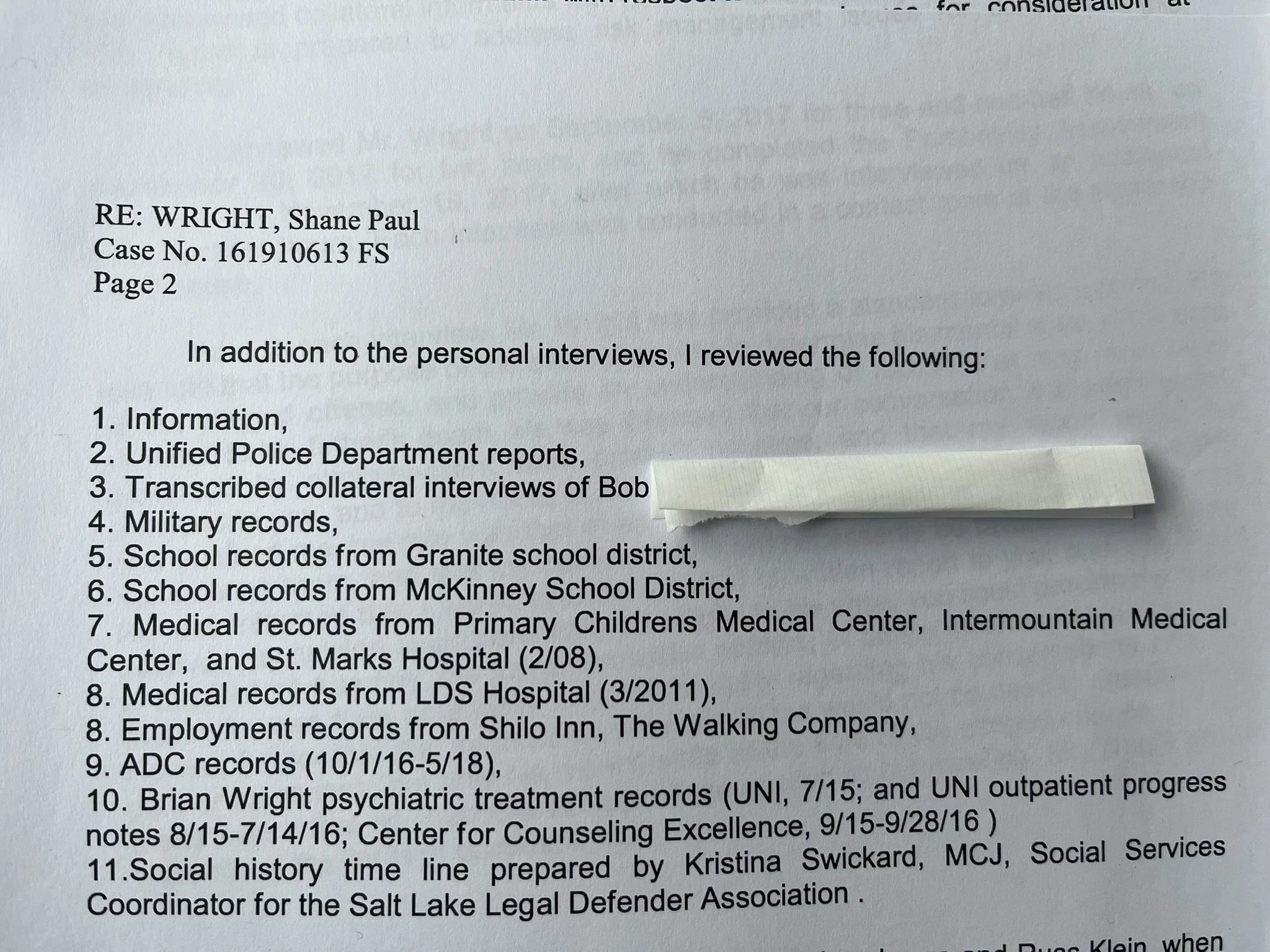
A group of humans sifting through every facet of my personal identity to find something wrong with me is the closest thing to rape I’ve ever experienced. I do understand why they were so thorough though, and going through all that shit has ultimately made me comfortable sharing myself with just about anyone. So here is my entire life and character, condensed to eighteen pages described by professional knower of people.
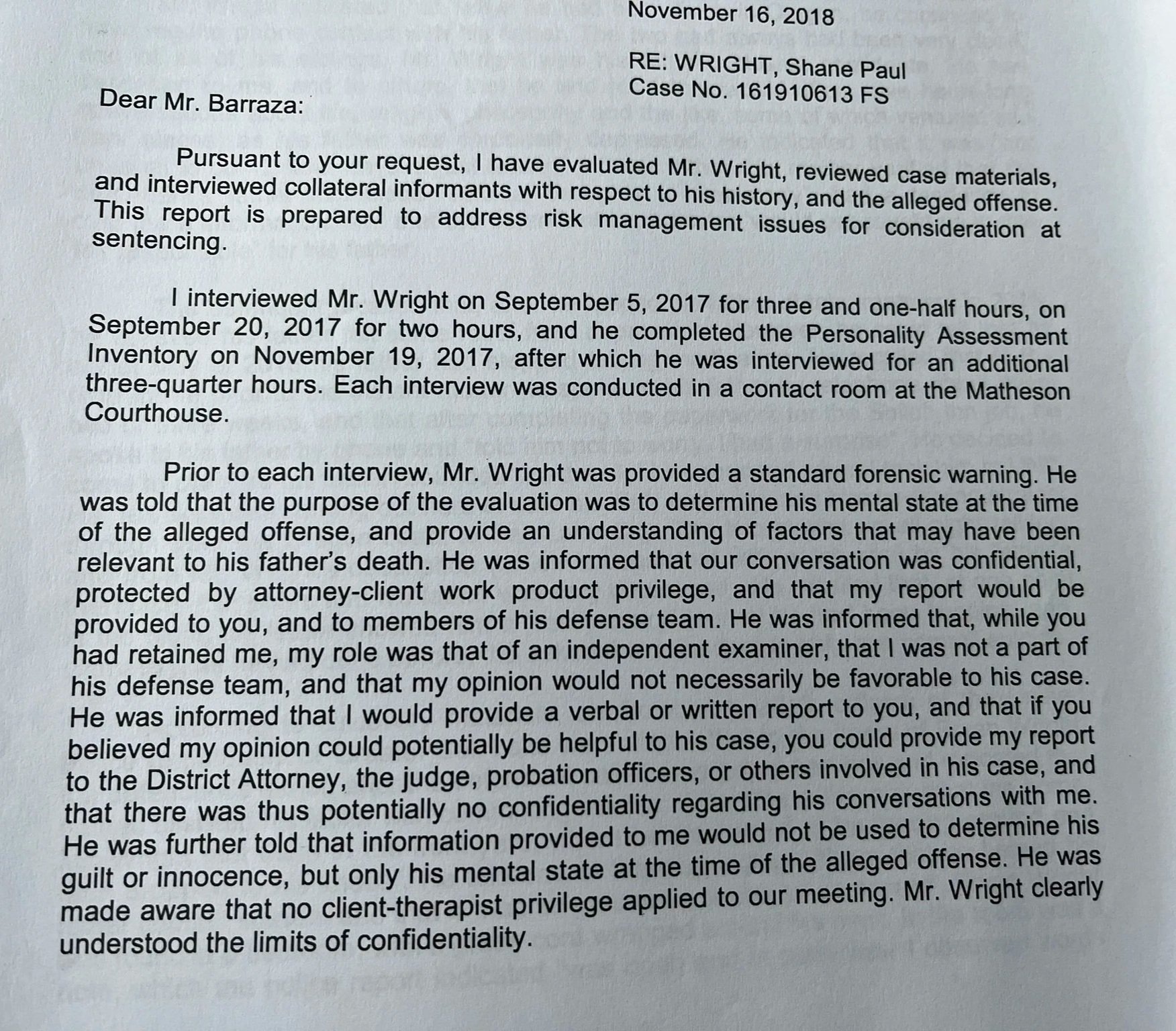
Dear Mr. Baraza:
Pursuant to your request, I have evaluated Mr. Wright, reviewed case materials, and interviewed collateral informants with respect to his history, and the alleged offense. This report is prepared to address risk management issues for consideration at sentencing.
I interviewed Mr. Wright on September 5, 2017 for three and one-half hours, on September 20, 2017 for two hours, and he completed the Personality Assessment Inventory on November 19, 2017, after which he was interviewed for an additional three-quarter hours. Each interview was conducted in a contact room at the Matheson Courthouse.
Prior to each interview, Mr. Wright was provided a standard forensic warning. He was told that the purpose of the evaluation was to determine his mental state at he time of the alleged offense, and provide an understanding of factors that may have been relevant to his father’s death. He was informed that our conversation was confidential, protected by attorney-client work product privilege, and that my report would be provided to you, and to members of his defense team. He was informed that, while you had retained me, my role was that of an independent examiner, that I was not a part of his defense team, and that my opinion would not necessarily be favorable to his case. He was informed that I would provide a verbal or written report to you, and that if you believed my opinion could potentially be helpful to his case, you could provide my report to the District Attorney, the judge, probation officers, or others involved in his case, and that there was potentially no confidentiality regarding his conversations with me. He was further told that information provided to me would not be used to determine his guilt or innocence, but only his mental state at the time of the alleged offense. He was made aware that no Client-Therapist privilege applied to our meeting. Mr. Wright clearly understood the limits of confidentiality.
Page 3 Skipped due to protecting the identity of others.
Start of Page 4: The police report indicates that Mr. Wright was “secured with handcuffs and was emotional”. He reported that he had driven from his home in Oregon to his father’s home the night prior. He spoke with the police officer, described his family, and gave some history about his father, who he described as “very religious but that he has always been suicidal. He said that his father bragged frequently about trying to suffocate himself to death when he was only five years old.”
Relevant personal history: Mr. Wright provided a personal history that was consistent with what is reflected in school, work, and medical records, and with what is reported by friends and family in various collateral interviews.
Mr. Wright was born and raised in Utah until he was 8 years old, at which time the family moved to Texas. He is the third of five children, with an older brother five years his senior, and older sister two years his senior, a younger sister and younger brother, each also separated by two years. When Mr. Wright was a child, the family belonged to the Church of Jesus Christ of Latter Day Saints, and his father was employed as a regional facilities manager of the Church. He described that his father received numerous promotions over the years, and Mr. Wright recalled that his father “gave the kids $50 each time he got a promotion”. He indicated that, in addition to working for the Church, his father was “a modern day monk” who talked a great deal about “modern day gospel, always church-related”. It is his understanding that his parents separated when he was 10 years old because his mother had decided to leave the church. He recalled no arguing between his parents prior to that time, and described their separation as amicable. His father paid child support, and Mr. Wright recalled that he was also fairly generous with gifts. He was present for family holidays and extended family events, even after his ex-wife remarried, and Mr. Wright indicated that his father always spoke highly of his mother, backed her up, and the converse was also true.
The defendant’s mother worked outside of the home as a personal trainer, secretary, a nutritionist, and other “random stuff”. After his parents separation, she was able to provide adequately for the family with her income and child support, and she remarried about a year later. Mr. Wright spoke highly of his stepfather, Russ Klein, whom he views as “extremely smart, a ‘man’s man’ who taught me how to be a man” and had strengths in different areas than did his father. He recalled that Mr. Klein worked in the education field. He indicated, and family verified that his father and stepfather had a good relationship, and at times took the family out together when their mother was busy. There appears to have been very strong emotional connections between the defendant’s mother, father, and stepfather, and with the children. Mr. Wright indicated that the family always had “the basics and more”, never wanting for food, shelter, clothing, sports gear for school, vacations and summer camp, piano lessons and the like. He added, however, that his mother in particular required “responsible adult stuff” like chore completion, and if a child wanted money “we had to work” holding an age-appropriate job.
The defendant described that, of the five Wright siblings, he has likely been the one closest to his father. When he was a youth, he shared a paper route with his father. He indicated that they had a “strong bong”, and that from his father he developed a “strong work ethic”. While he felt close to his father throughout his life, he also recounted that they had arguments “with a lot of passion”, particularly about matters related to the Church, as the defendant left the Church when he was 13 years old. He described that, even as a young adolescent (and maybe earlier), he had been interested in other faiths, and had become “really knowledgeable” by reading various religious sources, and “talking to people of many different faiths”. He indicated that he did not ask to be formally removed from the church rolls, as “it would be really detrimental to my father—he always carried a lot of hope that his children and maybe even his ex-wife would come back to the church. I didn’t see the need to leave the Church, that would be too rebellious, I didn’t see the need to”. After he stopped attending church he continued to attend church-based youth programs so he could be involved socially and in the community.
Mr. Wright did not experience abuse within or outside the family, got along well with his parents and siblings, and indicated that he had a stable home life before and after his parents’ divorce. He has had regular contact with his mother and stepfather since his arrest.
Developmental and Educational History: Mr. Wright indicated that his mother had an unremarkable pregnancy, and he was aware of no developmental delays, or disabilities. He described that he and his younger sister were “called the calm babies, we just laugh….we were just lively”, but when he was in a nursery program prior to school age he was noted to have too much energy, and once he was in school he was noted to be “too active, hyper, and rowdy”. However, he was educated in mainstream classes in public schools in Utah and Texas during elementary school, and in Utah for junior high and high school. His mother indicated that by the third grade his teacher believed he had ADHD, as he was “all over the place, sweet, but easily overstimulated by peers”. He was the class clown, and would often test the rules, although he was not overly or directly oppositional, but, according to his mother, was “mischievous”. Mr. Wright recalled that his mother “got me diagnosed because I said I was having trouble paying attention in school, very mild, not sever or extreme. He believes, and his mother reported that he took medication for a short time, but he did not like the effects, and his family did not see a behavioral difference (although his teacher apparently did (. Records for Howard R Driggs Elementary school indicate that he had some problems in kindergarten with getting “overexcited/setting down”, but was also described with a “positive attitude-loves to learn-fun-smart”/ He learned to read and was excellent in math. In first through fourth grade, he did well in academic subjects, and had a generally satisfactory or better citizenship marks. There is no indication in his school record of problematic behaviors warranting formal intervention, and he was never suspended or held back. He attended the fifth grade in Texas, and academic testing from that year shows scores generally in an average or better range. There is no indication in any of his elementary school records of learning problems or significant conduct problems, and it does not appear that his reported difficulty with high activity level and attention substantially interfered with his elementary school performance or conduct. Available records suggest that he was well-liked by teachers, and engaged appropriately in academic endeavors without behavioral problems noted in his school records.
Mr. Wright seems to have been less attentive to school once he reached junior high. He recalled that his teachers viewed him as “behind the scenes” in riling up other students and that he stopped putting forth good effort academically. He described himself as “a pretty average student, not a great GPA, didn’t ever apply myself. That was my form of rebellion, didn’t like the way teachers taught, the homework, having these assignments. That’s why my grades are not very good. I wasn’t really organized not that I didn’t do it, but I didn’t turn it in all the time. I didn’t care about the grades, I was against the grades, didn’t like the grade system at all, what it did to people…” Transcripts from Olympus Junior High indicate that he was an average to low average student who at times earned high marks, and other times, in the same classes, failed or barley passed. He took classes through alternative education programs, and ultimately earned enough credits to graduate in 2010 with a 1.92 GPA. He indicated that the only reason he made the effort to graduate was in order to join the military.
After his graduation, Mr Wright enlisted in the United States Army. He indicated there were two reasons for this: his grandfather “did it, a really cool dude”, and “I thought it would teach me to be more manly. Lots of people my age serve their country”. He added that he viewed basic training as a challenge he could face. He indicated and military records confirm that he attended boot camp in Fort Benning Georgia, for about six weeks, and then received an entry-level separation “which should have been a medical discharge. My sternum popped out, which it did in wrestling so they said it was a pre-existing condition”. He described that there were some interactions between him and military staff that “made it look like I was trying to get out”, which he denies. He recalled that “I felt like crap” after he was unable to complete service, although he was able to obtain work relatively quickly (see below) He does not have veteran or other military benefits.
After returning to Utah from For Benning, Mr. Wright took some classes through Coursera, an online learning program He indicated that he enrolled at Salt Lake Community College in 2011, but did not attend, as he “didn’t have a future I was thinking about going to college for”. He attended the Utah School of Massage Therapy briefly in 2013, and recalled that he “applied myself and studied, worked, went to school, worked, went to bed and got up and did it again’. Other interests led him to leave the course of study.
Employment History: Mr. Wright described working in various jobs after he left the military. His mother reported that he initially moved in with his father, but mostly stayed at home playing video games. The defendant recalled that he “felt like a huge failure” and contemplated suicide, actually developing a plan to “do myself in” on his nineteenth birthday. He recalled that “I almost got a few jobs” and after his suicide attempt, moved in with his mother and stepfather. Mr. Wright worked a paper route from the ages 12 through 14, a bakery at 15, an ice cream shop at 16, and Subway at 17.
Mr. Wright was hired by The Walking Company in 2011, at their store in downtown Salt Lake City. He indicated that he soon was promoted to a managerial position, and subsequently moved to Washington to open a new store. After about six months there his former manager in Utah was fired, and he was promoted and moved back to Salt Lake City in November of 2012. He recalled that he had “good selling skills”, earned company awards, and felt very successful. His mother has verified that he did well in this position, as did his former district manager, Frank R. He indicated, however, that he gets “restless legs”, often in April, and feels a need to move, change jobs, or otherwise travel. In 2014 he decided to walk The Appalachian Trail, noting that the Walking Company “sponsored” him, as he wore their shoes (which they provided him free of charge), sent him socks and gift cards along the way. He completed approximately 900 miles, “about half the trail” (actually about 43%) because of how much fun he was having meeting local people and other hikers in towns along the way. He indicated that he returned home after talking on the telephone to his father, who was putting together a “Last Big Vacation”. Mr. Wright indicated that he intended to return to finish the Trail, but instead moved in with his father and younger brother, as his father “was a psychological mess”.
Skipping parts due to others privacy.
Resuming Page 7: Had him admitted to the University Neuropsychiatric Institute (UNI). Bryan Wright’s admission record from UNI describes that he had told the defendant “That he is feeling suicidal, and that death would be a relief for him”. He revealed to UNI staff that he had made suicide attempts as a child by placing a bag over his head, and had also felt suicidal when his marriage ended. At the time of his July 2015 hospitalization, he was very clearly experiencing manic symptoms. The defendant believes, however, that once his father was hospitalized, he never truly accepted his diagnosis of bipolar disorder, and was just “talking the talk” to get out of the hospital. His father’s medical records indicate that he indeed was somewhat resistant to the use of medication, and discontinued it several months after leaving the hospital, albeit while under the care of a psychiatrist. He also continued to participate in outpatient therapy with a social worker, whose notes indicate that Bryan Wright continued to experience periodic manic symptoms months after his hospitalization. (e.g., in 2/16 “moods were rapid cycling”, “hasn’t slept in 2 days and can only get 3 hours a night”, “coming off the meds cased him to think of seriously killing himself again”)
In September of 2016 he was feeling confused, unloved, not sleeping well at night, and was clearly reporting a depressed mood at the end of September. At a therapy appointment on September 28, three days before the instant matter, he expressed that he had been in “ a lot of emotional pain on Saturday and had an awful sense of nothingness”, “said he didn’t want to kill himself then, just disappear”, and he made an appointment for the following week. The defendant indicated to me that, in conversation with his father a day or so later, he recognized that something was wrong, and “ I felt like I was coming out here to save his life”. Mr Wright left Oregon for Utah, drove straight through for about 16 hours, and arrived at his father’s home around midnight. Other aspects of his very intense relationship with his father are discussed further, below.
Mental Health History: As noted above, the defendant’s mother described that he had Attention Deficit Disorder as a child. She noted that he was easily overstimulated, which contributed to difficulties in school. Mr Wright recalled having trouble paying attention in school, which he indicated was very mild, not severe or extreme”/ He was treated with medication only briefly, and no other interventions were sought during childhood or adolescence.
(at the bottom of this page, Dr Cohn made a little *note: Interestingly, a psychiatric aftercare note indicates that Bryan Wright reported he had been thinking “maybe it was okay to kill himself and felt that was okay that he starts planning, that is why he called his friend, Shane, and Shane helped him get to UNI to get hospitalized”. His psychiatrist apparently did not recognize that Shane was actually Bryan Wright’s son.)
When Mr. Wright was almost 16 years-old, he accidentally overdosed on what he believed was pain medication sold to him when he was on the wrestling team. He indicated, and records verify that he stated at the time the overdose was accidental; he had actually been attempting to get high, and sequentially took several pills at a time over the course of the day, resulting in loss of consciousness. He had obtained what he believed was Lortab from another student, which was actually baclofen, a muscle relaxant. While he was at the Intermountain Medical Center for medical stabilization, a psychological assessment was obtained, which confirmed that this had not been a suicide attempt. However, in addition to having symptoms of ADHD, it was thought that Mr. Wright was experiencing symptoms of depression, and a referral to therapy was made. It was also noted that his father and brother both experienced depression. Mr Wright believed he went to counseling for a short time after this incident, but recalled that he was basically said whatever he needed to in order to “get done with counseling”. Mr. Wright has maintained that the overdose was accidental and, at that time, therapy was not something that he needed, although in retrospect believes it may have helped him to better focus his life, had he been willing to participate more meaningfully at that time.
Mr. Wright indicated that about two years later there was a time when he contemplated suicide. Interestingly, he did not view himself as depressed, per se, but he had “felt like a huge failure” after his truncated experience in the military, and, at the age of 18 years, planned to kill himself when he turned 19. He recalled that he was “committed” to suicide, because he was “obsessed with what would happen in the afterlife”, and was preoccupied with his father’s ideas about the LDS church and associated beliefs about what happens after death in the present life. He recalled that his father was “so obsessed” with these ideas, and it appears that the two had many discussions about the topic. He spent a great deal of time “questioning why am I alive, why am I living’, and “when I couldn’t come up with good reasons, then I needed to know about the afterlife”.
The day after his nineteenth birthday, as planning, he made a suicide attempt. According to records from LDS Hospital, it was reported that he “wrapped an elastic band around his neck, but when unsuccessful, decided to “bleed (himself) out in the shower”. He made a number of superficial scratch marks on his face and neck, and much deeper cuts to both his thighs. The emergency room physician noted “he seems to treat this whole thing as another “day at the office”, noting what appears to have been a rather bland affect. The crisis note indicates he “says he has been suicidal for years”, and had been planning his suicide “for several months”. He was noted to have racing thoughts, decreased need for sleep, indicated he has to force himself to eat, reported “odd feelings of being a different person in the daylight than at night”. Occasional marijuana use was noted, with no other substance abuse issues. A question of bipolar disorder was raised.
During his hospitalization, other symptoms of bipolar disorder were reported, such as racing thoughts to some degree, some grandiosity, brief periods of increased energy, and self-reported times of “decreased need for sleep, increased self-confidence, increased talkativeness, difficulty concentrating, increased activity, ad increased social activity”. The treating psychiatrist described him as a “fairly intense person” who, although self-described as depressed, had “lively” affect and seemed to be ore in a “mixed state”. Changes in mood state were described as fairly rapid.
Mr. Wright completed a one-week hospitalization. The psychiatric discharge summary notes that his mood improved “quite quickly”, and his suicidal ideation remitted. He was noted to have a “fairly significant” panic attack while in the hospital, and was prescribed medication, which he took briefly. The psychiatrist indicated that, while Mr. Wrights parents offered to allow him to remain in their home, he instead was intrigued by the idea of homelessness, as he had spoken to some of the other patients who were homeless, and “the patient thinks that he wants to become ‘street smart’”. At the time of his hospital discharge, it was not clear whether his depression was part of a bipolar disorder, but he was not prescribed mood-stabilizing medication, nor was he prescribed antidepressant medication, but was given Seroquel for sleep, and a month’s supply of Klonopin, a mild tranquilizer. He was referred for both therapy and medication aftercare, but he did not see the need for further intervention.
Mr Wright did not believe that he has had other episodes of depression per se, or psychiatric instability. However, his mother and stepfather added that in the several months prior to the instant matter, they, and everyone in the family was concerned about Mr Wright. His Mother, Mr. Klein, described her son as something of a “hippie” who had lived a “vagabond, gypsy lifestyle” after he moved to Oregon in 2015. Her contact with him decreased, and she viewed him as “completely different than he had ever been”, although her husband did not see this similarly. Ms Klein saw her son as troubled, and indicated that his siblings also “kept asking what’s up with Shane”, although he was insist that “everything is great” when they spoke. She indicated that Mr Wright has done a great deal of reading about spiritual things and reincarnation, and in mid-August of 2016 had sent her texts that had religious or spiritual overtones. They did not have further contact through the time of the alleged matter, but Ms. Klein also recalled that Mr Wright’s father had contacted her and was “worried about Shane”, as he seemed different to the whole family. She also recalled that the defendant’s father, the victim of the instant matter, was in a depressive state in the two or three months prior to his death, and had told her that he had stopped his medication (see below).
After the instant offense, Mr Wright was seen by jail mental health staff. He initially was experiencing a great deal of anxiety, reported racing thoughts, but overall, he fells that depression is by far his biggest problem”. He has been open about his life history, and mental health providers have questioned whether he has bipolar disorder. At one point he was prescribed a mood stabilizing medication, Depakote, but did not like the side effects, and has primarily been prescribed Effexor, and antidepressant medication, and Zyprexa, an antipsychotic prescribed to him to “help him with his mind racing”, and with sleep. In January of 2017 he reported that the Effexor had decreased his anxiety and depression, and he has continued to take medication, which his mother believes has made a difference, and she perceives him as more emotionally stable than was the case in the years prior to the instant matter. He as not been housed in the mental health section of the jail, and has not been a problem at Salt Lake County Jail, or Oxbow where he is currently in custody.
Substance Use: The defendant denied a history of substance abuse. He acknowledged drinking beer, at times to excess, according to collateral contacts, but not typically on a daily basis. He acknowledged the more frequent use of marijuana (which was legal in Oregon, where he had been living, and in Washington when he lived there). He also used marijuana to help him sleep, as this has been a problem for him off and on throughout his life, and a prescription for medical marijuana was found in his car after his arrest. His former district manager indicated he never had concerns about Mr Wrights use of alcohol or drugs.
Legal History: Mr. Wright has no prior criminal history.
Mental State: Mr. Wright was interviewed three times during the course of this evaluation, primarily with respect to his mental state at the time of the alleged matter, but a mental status exam, and psychological testing for diagnostic purposes were also completed. Each interview took place in a contact interview room at the Matheson Courthouse, which was a quiet space without external distraction. On all occasions, Mr Wright was neat and clean with well-groomed hair, mustache and goatee, clean fingernails, and he gave a general sense that he has been engaging in self-care adequately. He was interpersonally very pleasant, is quite verbally articulate, made good eye contact, and was able to engage in conversational exchange. There was no pressure to his speech, but as has been noted by others, he can talk a lot, provide excessive details, but is easily redirected if he continues on a topic for too long. There were no observations of rapid topic shift, and he did not lose hi train of thought, even when making reflective asides. His affect was appropriately variable, and associated with the topic discussed. At times his affect seemed brighter than might be expected, given his circumstances, and he can be verbally quite animated, although neither of these features were of a degree to suggest manic, or hypomanic elevation. There were no observations of irritability, nor did Mr Wright express aggressive thoughts or intent. He was able to express clearly, and was not agitated, distracted, or restless during each lengthy interview.
At all interviews, Mr Wright knew who and where he was, the day, month, and year. His memory was fully intact for both recent and remote events. He denied past or current experiences of auditory hallucinations, and did not seem to be responding to internal stimuli during any of our contacts. He did not express frankly delusional ideas, but did describe some of his experiences, accomplishments and relationships in a manner that seemed mildly grandiose. This has also been noted by others, but collateral information from family and friends suggests that Mr Wright has indeed had an interesting and somewhat colorful life, and has applied his talents in ways that have, at times, brought him personal success.
Mr Wright denied all symptoms that would be indicative of a diagnosable mood disorder, although the mild grandiosity noted could certainly be associated with a bipolar-spectrum disorder, given what is detailed about his prior history. So, too, could an overly bright affect, which was demonstrated at times during the present evaluation, and has been noted by some jail treatment providers.
To clarify diagnosis, Mr Wright was administered the Personality Assessment Inventory, a paper and pencil measure that addresses both what was formerly referred to as personality characteristics.
There are several validity indicators on the PAI that assess response styles that could affect the results of the testing. Mr Wright appears to have attended and responded consistently to the content of test items. There was no indication that he attempted to present himself in either an unrealistically positive light, or an exaggerated or more negative manner than is actually the case, but there was some suggestion that he may not have acknowledged the extent to which substance use may be problematic.
Mr Wright’s PAI profile did not indicate current mood disorder per se, but did suggest that he as had problems associated with an elevated and variable mood. While he is likely to view himself as outgoing, self-confident, and ambitious, others may perceive him as impatient or demanding. While he tents generally to feel satisfied with himself, his current circumstances are likely contributing to some fluctuations in self-esteem, and it is likely that, under stress, he will be self-critical and less decisive. He is, nonetheless someone who presents himself as friendly, extraverted, cheerful, and positive. His PAI profile is characteristic of someone who prefers interpersonal contact to solitude, and who tends to offer hep to others in times of need. He sees himself as someone who has many friends and is socially comfortable. His social support system is likely to mitigate the negative effects of stress, when present.
Although Mr Wright is not currently reporting symptoms of a major psychiatric disorder, he does report experiencing thought about suicide and this indicates that suicidal thinking, and associated behaviors should periodically be investigated.
The available history, records, collateral interviews with significant others, and interviews for the present matter indicate that MR Wright is an individual who has had at least one episode of depression when he was 19 years old, and episodes of mood elevation, coupled with decreased sleep and increased productivity that strongly suggest a history of hypomania, if not frankly manic behavior. It is noted that he has a vulnerability to mood disorder in light of his own history and his father’s well-documented bipolar disorder. In my opinion, he meets the criteria for a diagnosis of Bipolar II in remission. He also demonstrates some narcissistic features, although at this point, I would not consider that they rise to the level of a diagnosable personality disorder.
Issues Related to Reoffence: By all accounts, Mr Wright was involved in a deeply intense and emotionally tangled relationship with his father. The instant matter occurred against a backdrop of his father’s decompensation, and the defendant’s long-standing pattern of providing a listening ear and source of support. At the time of the offense, he had driven for about 16 hours, had stayed up all night with his father, and engaged in dark conversation that included his father’s entreaty for assistance with suicide, which had occurred in times past as well. At one point earlier in the night, Mr Wright smoked marijuana from a vape pen, which may or may not have been further disinhibiting, but for the purpose of treatment recommendation, is considered at least a potential focus for intervention.
Historical factors were considered when assessing Mr Wrights risk. He was young at the time of the offense, under the age of 26 years-old, which Is an age cohort associated with a higher risk of violence than is the case for an older age cohort.
Positive historical factors considered for this young man are his relatively good adjustment during elementary school, a minor history of alcohol and drug use prior to the age of 18 years, and NO history of either violent or non-violent juvenile or adult offending prior to the instant offense. He has not experienced major life traumas and the absence of such life experiences is associated with lower risk for violent recidivism.
There are several risk factors associated with aggressive recidivism which may be present for this gentleman, although these are not clear-cut. Together, they may be conceptualized as stability issues. First and foremost, Mr Wright had an extraordinarily intense relationship with his father, and his personal boundaries, and he has some limits in his ability to distance himself under stressful relationship conditions. This was, in my opinion, contributory to the instant matter, and could be a “red flag” in the future, similarly intense relationships Mr Wright has described himself, and others have described him as someone who gets close quickly, and deeply, and this seems to have been a challenge for him with his father, and with others. This risk factor that is amenable to intervention, and Mr Wright may benefit from psychotherapy to address his family experiences, and relationship dynamics, and thus reduce the risk for engaging in the kind of enmeshed relationship that was a factor in the instant matter.
Finally, while the defendant has by all accounts, easily been able to get jobs and perform well, he has not kept jobs, and thinks of himself as something of a “free spirit”. While such a lifestyle has not resulted in problems for him (such as contact with the criminal justice system, financial stress, homelessness and the like), the lack of future plans and stability are risk factors that can be managed in a community setting.
In summary, I would not consider Mr Wright to have a moderate or high risk for future aggression, whether in a correctional or supervised setting or if considered for community release. It will be important to monitor Mr Wrights mood states, treat mood fluctuations when appropriate, and address suicidal ideation, if present.
(at the bottom of this page, Dr Cohn made a little *note: It is also a consideration that Mr Wrights self-described need to have yearly shifts in life, such as quitting work and walking the Appalachian trail, or moving to the Oregon Coast, is related to a previously untreated bipolar disorder. I do not wish to pathologize alternative lifestyles, and note that, prior to the instant matter, Mr Wright was described by family and friends alike as engaging, enthusiastic, fun, and interesting. Nonetheless, a more stable lifestyle is associated with lower violence risk, and is thus noted here. I would also note that he has always had good family support, which is a protective factor.